




Other CT Humanities Programs

Creative Commons Licensing

FUNDING CUTS IMPACT CT HUMANITIES: Help CT Humanities navigate recent funding cuts and continue our vital work across Connecticut. All donations made to CTH will be matched dollar-for-dollar up to $50,000. Donate today!

Now Viewing:
Hartford
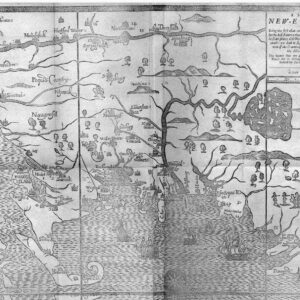
Edward Hopkins: Connecticut’s 2nd Governor
Edward Hopkins (1600–1657) was an influential figure in the early history of the Connecticut Colony, serving multiple terms as colonial governor.
Read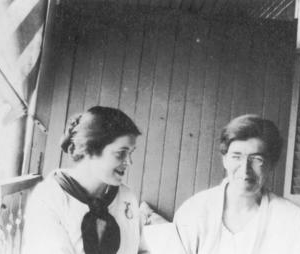
Ethel Collins Dunham: Pioneer in Pediatrics
A student and professor of medicine, Dr. Ethel Collins Dunham devoted her life to ensuring the care of children throughout the early and mid-20th century.
Read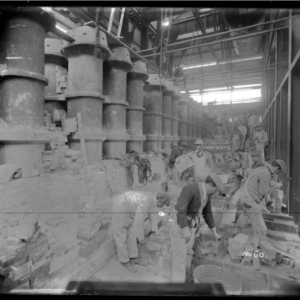
Early Connecticut Gas Light Companies
The first private gas light companies in Connecticut appeared just before 1850 in New Haven, Hartford, and Bridgeport.
Read
“Girl Pilot”: Mary Goodrich Jenson Breaks Barriers in Aviation and Journalism
Blending her aviation and journalism careers, Wethersfield’s Mary Goodrich Jenson pushed the boundaries of both fields.
Read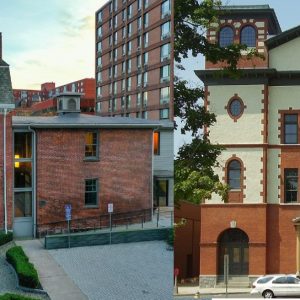
The Amos Bull House and Sterling Opera House: The First Connecticut Listings on the National Register of Historic Places – Who Knew?
The Amos Bull House in Hartford and the Sterling Opera House in Derby are tied for Connecticut’s first listing on the National Register of Historic Places.
Read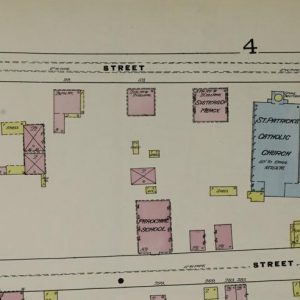
Connecticut’s First Roman Catholic Church
Hartford’s Holy Trinity Church became the first Roman Catholic church in Connecticut in 1829 and served the community for over 20 years.
Read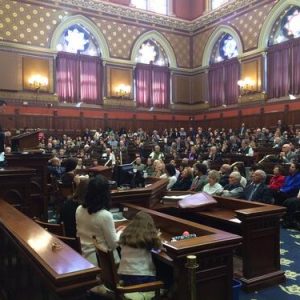
Connecticut and the Armenian Genocide
The Armenian genocide during the early 20th century had a profound impact on Armenian communities and their descendants in Connecticut.
Read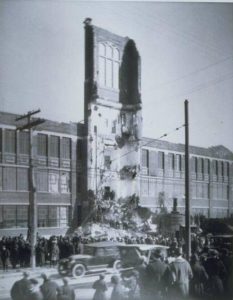
Fuller Brush Tower Collapses – Today in History: March 31
On March 31, 1923, a 56,000-gallon water tank dropped through 4 concrete floors of the Fuller Brush Company Tower.
Read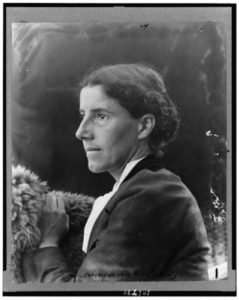
Charlotte Perkins Gilman
Best remembered for her short story “The Yellow Wallpaper,” this Hartford author’s larger legacy is a life dedicated to women’s issues and social reform.
Read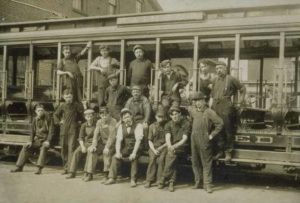
A Revolution in Horse Power: The Hartford & Wethersfield Horse Railroad Goes Electric
In 1888, Hartford commuters and city-goers zipped down Wethersfield Avenue in a horseless trolley car for the first time.
Read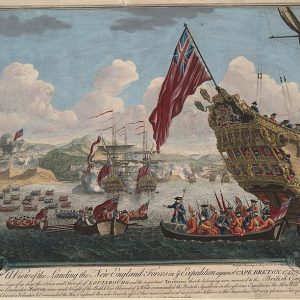
Connecticut’s French Connections
From Huguenots to French Canadian mill workers to modern immigration, Connecticut has always been a place shaped, in part, by a steady French influence.
Read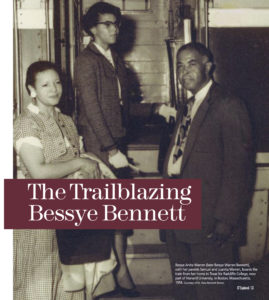
The Trailblazing Bessye Bennett
In 1974, Connecticut finally admitted its first African American female lawyer, Bessye Bennett.
Read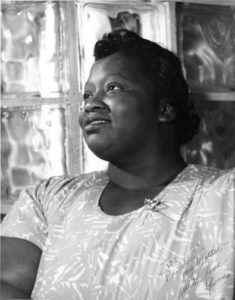
Actress Gwen Reed Best Remembered for Dedication to Childhood Literacy
Gwen Reed was an actress and educational advocate who grew up in Hartford in the early 20th century.
Read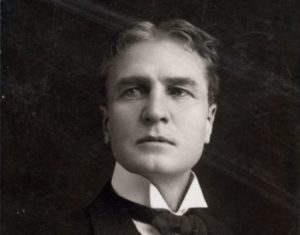
William Gillette’s Last Performance – Today in History: February 27
On February 27, 1936, William Gillette made his last appearance on any Connecticut stage at the Bushnell Memorial auditorium in Hartford.
Read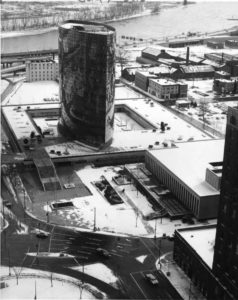
The Phoenix Building, Hartford
The Phoenix Mutual Life Insurance Building is a significant example of the modernist architectural style that was prevalent in urban renewal projects in the 1950s and 1960s.
Read
Civic Center Roof Collapses – Today in History: January 18
On January 18, 1978, at about 4:20 in the morning, the Hartford Civic Center roof collapsed.
Read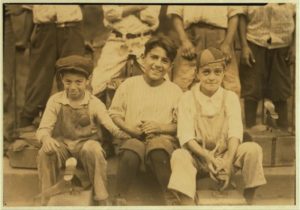
Boot Blacks and the Struggle to Survive in Hartford
In the late 19th and early 20th centuries, young boys who shined shoes (sometimes 70 hours per week) were the primary breadwinners for many struggling families.
Read
The Fundamental Orders of Connecticut
The Fundamental Orders, inspired by Thomas Hooker’s sermon of May 31, 1638, provided the framework for the government of the Connecticut colony from 1639 to 1662.
Read
A Turn-of-the-Century New Year’s Eve
Hailed as the “Century Celebration,” the evening of December 31, 1900, saw revelry and reflection as individuals throughout the state welcomed the New Year.
Read
Hartford’s “Façade House”: The Unique Home of Chick Austin
A. Everett “Chick” Austin Jr. and his wife, Helen, designed one of the most unique homes of the 20th century in Hartford.
Read
The Hartford Convention – Today in History: December 15
On December 15, 1814, delegates to the Hartford Convention met in secret at the Old State House in Hartford.
Read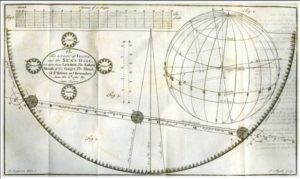
Transit of Venus: German Scientists Visit Hartford
In the 18th and 19th centuries, the transit was an important opportunity for scientists to calculate the distance between the earth and the sun—the basis for the astronomical unit.
Read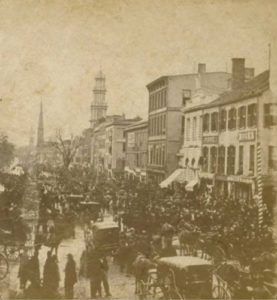
When Elections in Hartford Were a Piece of Cake
Unlike today, in the 18th and 19th centuries, Election Day met with great celebration.
Read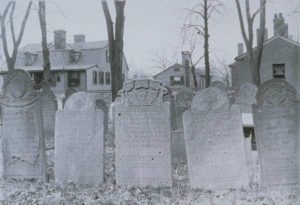
The Art of Burying the Dead: Exploring Connecticut’s Historic Cemeteries
From winged death’s heads to weeping willows, gravestone carvings in Connecticut’s historic cemeteries reflect changing attitudes toward mourning and memorialization.
Read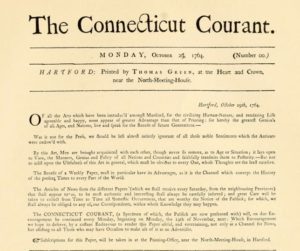
The Oldest Continuously Published Newspaper – Today in History: October 29
On October 29, 1764, New Haven printer Thomas Green established a weekly newspaper, the Connecticut Courant, in Hartford.
Read
Yankee Ingenuity: Curtis Veeder, a Mechanical Genius and Shrewd Businessman
Curtis Veeder patented a bicycle seat he sold to the Pope Company, and later invented a cyclometer for measuring distances traveled by bicycles.
Read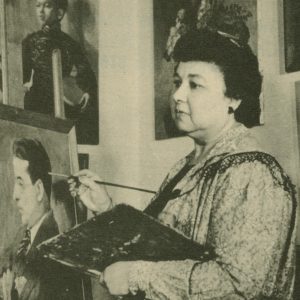
Laura Wheeler Waring: Renowned African American Portrait Artist and Educator
Born in Hartford, Laura Wheeler Waring was an eminent portrait artist of prominent African Americans of the Harlem Renaissance.
Read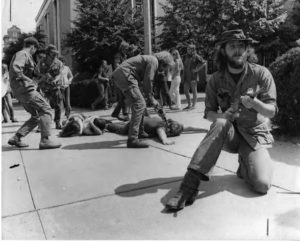
Vietnam Protests in Connecticut
Opposition to the war in Vietnam manifested itself in Connecticut in many of the same ways it did across the country.
Read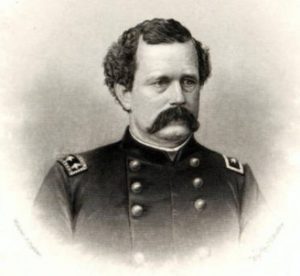
General Joseph R. Hawley Helps Commemorate Connecticut’s Civil War Soldiers
“Let monuments be raised in every town, let songs be sung and orations delivered,” urged this state politician and skilled speechmaker.
Read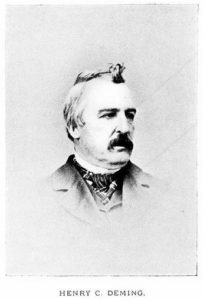
Henry Deming: Mayor of Hartford and New Orleans
Henry Deming served as mayor of Hartford and then as the provisional mayor of New Orleans during the Civil War before writing a biography of Ulysses S. Grant.
Read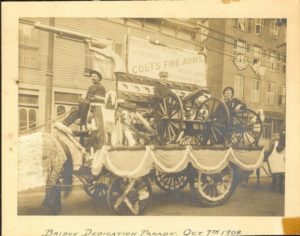
Hartford’s Industrial Day – Today in History: October 7
Hartford celebrated the 1908 opening of the Bulkeley Bridge, which connected Hartford and East Hartford, with a three-day extravaganza.
Read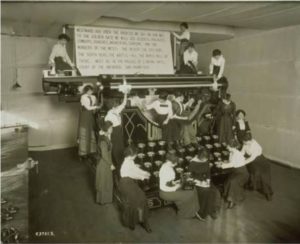
A Different “Type” of Connecticut Industry
In the middle of the 1800s, the invention of the typewriter revolutionized the way Americans communicated, including in Connecticut.
Read
Get Out Your Paper Dress, Gal! – Who Knew?
In 1966, the Wadsworth Atheneum in Hartford was featured on the popular TV show, I’ve Got a Secret.
Read
Eighteen Years in the Making: Connecticut’s 1991 Gay Rights Law
Connecticut’s 1991 “gay-rights law” was one of the state’s first LGBTQ+ civil rights laws and prohibited discrimination based on sexual orientation in housing, employment, and credit.
Read
Education/Instrucción Combats Housing Discrimination
This group’s bilingual name reflected its educational mission as well as its dedication to unified, multicultural cooperation for the common good.
Read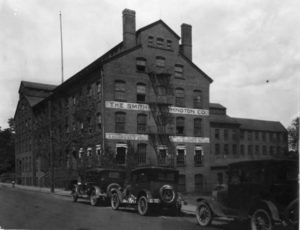
Saddles Fit For a Shah
Since 1794, Hartford-based Smith-Worthington Saddlery has made tack for horses—along with the occasional ostrich harness and space suit prototype.
Read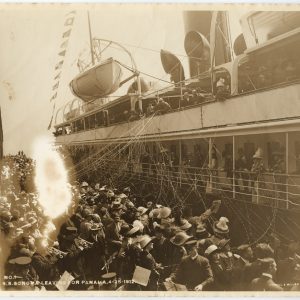
Helen James Chisholm: A Hartford Teacher in Hawaii
Originally from Hartford, Helen James Chisholm’s career took her all the way to the Pacific to teach and run an orphanage.
Read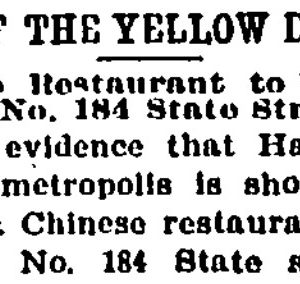
At the Sign of the Yellow Dragon: Hartford’s First Chinese Restaurants
The first Chinese restaurant opened in Hartford in 1898 and evolved as immigrants from different parts of China introduced new tastes.
Read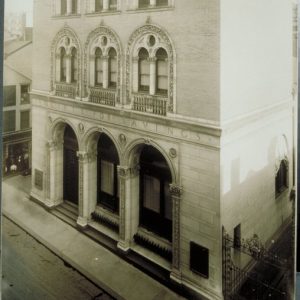
Connecticut’s First Mutual Savings Bank Opens in Hartford
On June 1, 1819, Governor Oliver Wolcott Jr. approved a legislative charter for the Society for Savings in Hartford—the first mutual savings bank in the state.
Read
Elisha Root Changes Industry – Who Knew?
Elisha Root standardized production and made the Colt revolver the first handgun in the world with fully interchangeable parts.
Read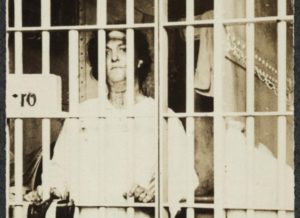
19th Amendment: The Fight Over Woman Suffrage in Connecticut
In Connecticut, Frances Ellen Burr and Isabella Beecher Hooker took up the cause by forming the Connecticut Woman Suffrage Association (CWSA) in 1869.
Read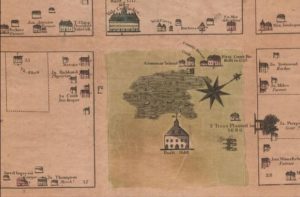
Putting History on the Map
While maps serve a utilitarian function at the time of their production, they become snapshots in time of the memories of those who designed them.
Read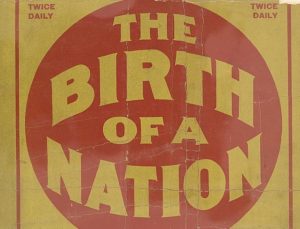
Hartford’s Challenge to “The Birth of a Nation”
D. W. Griffith’s silent movie, the racially charged “Birth of a Nation,” initially played to large audiences in Hartford before meeting with official resistance after World War I.
Read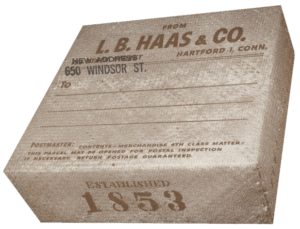
Cash Crop: L.B. Haas & Co. and the History of Tobacco in Connecticut
Louis B. Haas was a Dutch immigrant who opened a retail cigar store, Essman & Haas, on Central Row in Hartford in the late 1840s.
Read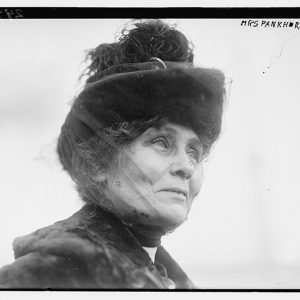
Emmeline Pankhurst’s “Freedom or Death” Speech Energizes Connecticut Women in 1913
In 1913, a famous British suffragist, Emmeline Pankhurst, gave a powerful and memorable speech on the steps of the Parsons Theater in Hartford.
Read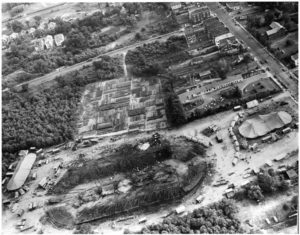
Hartford Circus Fire: “The Tent’s on Fire!” – Who Knew?
The Hartford Circus Fire on July 6, 1944, may be the worst human-caused disaster ever to have taken place in Connecticut.
Read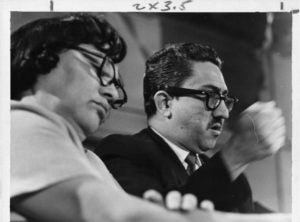
Maria Colón Sánchez, State Representative and Community Advocate
The first Latina elected to the Connecticut General Assembly started as a grassroots activist for Hartford’s Puerto Rican community.
Read
WDRC AM/FM – Connecticut’s Oldest Commercial Radio Station
WDRC is the oldest continuously operated commercial radio station in Connecticut that uses both AM and FM transmissions.
Read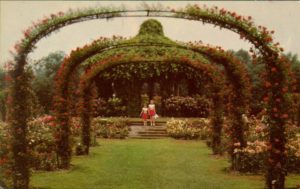
Oldest Rose Garden – Who Knew?
The Elizabeth Park Rose Garden in Hartford is the oldest municipally operated rose garden in the country.
Read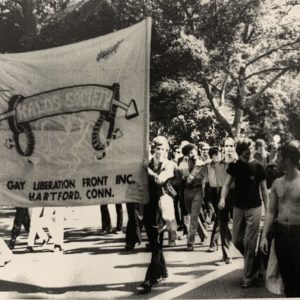
Kalos Society: Connecticut’s First Modern LGBTQ+ Activist Organization
The Kalos Society emerged in the late 1960s as the first gay activist organization in Connecticut
Read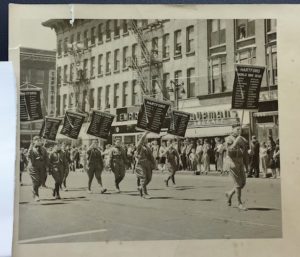
Hartford’s Commemoration of World War I Servicemen and Women
At the end of the First World War, Hartford found a variety of ways to honor the sacrifices of its servicemen and women.
Read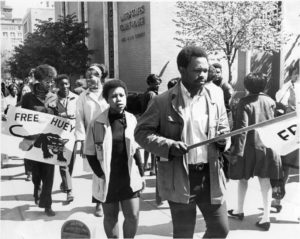
The Black Panther Party in Connecticut: Community Survival Programs
The Black Panthers had a significant presence in Connecticut in the 1960s and ’70s, particularly through community programs aimed to serve minorities living in the state’s more urban areas.
Read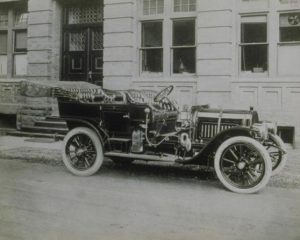
Albert Augustus Pope, Transportation Pioneer
Pope’s bicycles and automobiles not only gave 19th-century consumers greater personal mobility, they also helped propel social change.
Read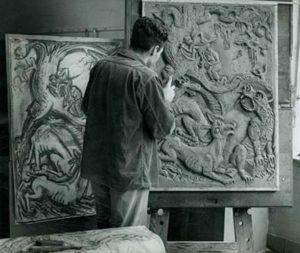
Breaking the Mold: Tradition and Innovation in the Work of Elbert Weinberg
Elbert Weinberg was a Hartford-born sculptor who earned international fame for his works, many of which were influenced by his Jewish faith.
Read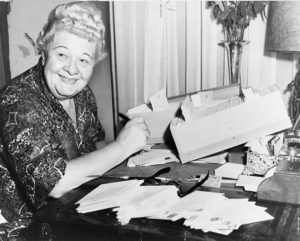
Sophie Tucker, The Last of the Red-Hot Mamas
Hartford’s own leading lady was a lively entertainer whose career spanned over five decades and whose generosity spilled over to various and numerous charities.
Read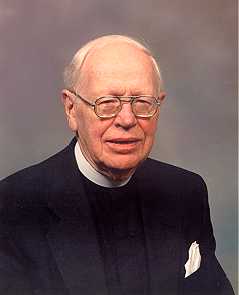
Canon Clinton Jones: A Revolutionary Figure in Connecticut’s LGBTQ+ History
Canon Clinton Jones was a central figure in Connecticut’s LGBTQ+ community and a pioneer for compassionate care, queer visibility, and gender affirmation.
Read
Tradition and Transformation Define Hartford’s Jewish Community
From the mid-1800s to the present, Jews have called Connecticut’s capital city home and enriched it with their cultural traditions and civic spirit.
Read
Yung Wing, the Chinese Educational Mission, and Transnational Connecticut
In their respective tragic but inspiring final American acts, Yung and the Mission reflect the worst and best of the Chinese Exclusion Act era.
Read
George Griffin: “Devoted Friend” to Samuel Clemens
Mark Twain wrote The Adventures of Huckleberry Finn and used his “good-natured” and “devoted” servant, George Griffin, as a likely model for one of literature’s most memorable figures—Jim, the runaway enslaved man.
Read
The Park Movement in Hartford
The Hartford City Parks Collection comprises a rich archive, documenting Hartford’s pioneering effort to establish and maintain a viable system of municipal parks and connecting parkways between them.
Read
Samuel Waldo Born – Today in History: April 6
Samuel Lovett Waldo was an early 19th-century portrait artist who worked among such famous colleagues as John Trumbull, Benjamin West, and John Singleton Copley.
Read
Emily Holcombe Pioneered to Preserve Connecticut’s Colonial Past
Emily Seymour Goodwin Holcombe was an activist and preservationist who took pride in the state’s history, particularly its colonial past.
Read
Aetna Helps Make Hartford “The Insurance Capital of the World”
Aetna started out as fire insurance company in Hartford in 1819, but spread into life insurance and is now a global leader in the health insurance industry.
Read
Hartford’s Sex Trade: Prostitutes and Politics
Union organizer Rebecca Weiner was among the few who proposed to address the social and economic conditions that enabled the world’s oldest profession to thrive in the capital city during the 1800s.
Read
The Reader’s Feast: A Bookstore Ahead of Its Time
For over two decades, The Reader’s Feast was the most progressive independent bookstore in the Hartford area and provided a space for literature, community, food, and affirmation.
Read
The Pie Man from Georgetown and the Connecticut ~ Copperthite Pie Company
More than just a wagon driver and Civil War veteran, Henry Copperthite built a pie empire that started in Connecticut.
Read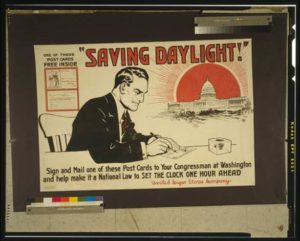
Playing with Time: The Introduction of Daylight Saving Time in Connecticut
Despite both formal and informal attempts to regulate the observance of Daylight Savings Time in Connecticut, it still remains a controversial topic for many state residents.
Read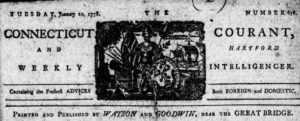
Hannah Bunce Watson: One of America’s First Female Publishers
Hannah Bunce Watson was one of the first female publishers in America and helped the Hartford Courant survive one of the most challenging times in its history.
Read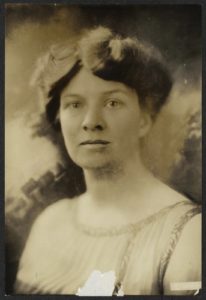
Katharine Houghton Hepburn, A Woman Before Her Time
This Hartford suffragist and reformer fought for women’s rights in the first half of the 20th century.
Read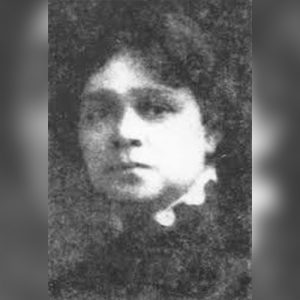
Mary Townsend Seymour: Hartford’s Organizer, Activist, and Suffragist
Mary Townsend Seymour was a leading organizer, civil rights activist, suffragist, and so much more in Hartford during the early 20th century.
Read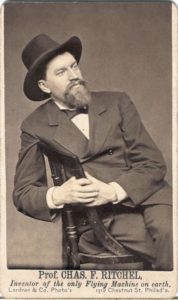
Charles Ritchel and the Dirigible
An entrepreneur’s design for a lighter-than-air vehicle takes flight in the late 1800s and inspires a new state industry.
Read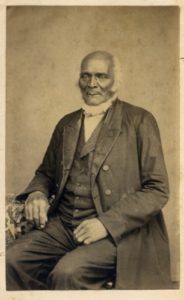
James Mars’ Words Illuminate the Cruelty of Slavery in New England
Mars’ landmark memoir of the mid-1800s reveals how enslaved men and women suffered—and resisted—the injustices of bondage.
Read
A Different Look at the Amistad Trial: The Teenager Who Helped Save the Mende Captives
James Benajmin Covey, a former slave, was only 14 years old when asked to serve in one of the most publicized trials in American history.
Read
Samuel Colt: From Yankee Peddler to American Tycoon
Hartford native Samuel Colt built a financial empire on his design and automated production of the revolver.
Read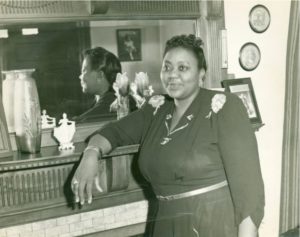
Marietta Canty House
Hartford’s Marietta Canty House is primarily significant for its association with actress Marietta Canty, who received critical acclaim for her performances in theater, radio, motion pictures, and television as well as for her political and social activities.
Read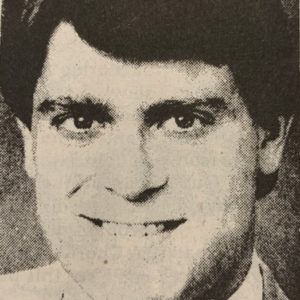
Richard Reihl: The Hate Crime That Became a Turning Point for LGBTQ+ Civil Rights
The 1988 murder of Richard Reihl, a gay man from Wethersfield, galvanized and mobilized communities to organize and transform LGBTQ+ civil rights legislation in the state for decades to come.
Read
The Lives of Addie Brown and Rebecca Primus Told Through their Loving Letters
Addie Brown and Rebecca Primus were two free Black women whose lives intersected in Hartford, Connecticut in the 19th century. Letters written between them imply their relationship was more than friendship.
Read
A Valley Flooded to Slake the Capital Region’s Thirst
From 1927 to 1948, the Metropolitan District Commission built the Saville Dam and flooded the valley to create the Barkhamsted Reservoir, displacing over a thousand people.
Read
LGBTQ+ Mental Health Treatment in the 20th Century
The simultaneous development of accepted mental health practices and LGBTQ+ visibility over the decades offers a chance to examine how psychological research contributed to the discrimination of LGBTQ+ individuals and communities.
Read
Four Saints in Three Acts Debuts – Today in History: February 7
On February 7, 1934, the Wadsworth Atheneum debuted the modernist opera Four Saints in Three Acts in its new Avery Memorial Theater.
Read
G. Fox and the Golden Age of Department Stores
Founded by Gerson Fox in 1848, G. Fox & Co. went on to become the nation’s largest privately owned department store.
Read
Henry Barnard Advances State and National Education Initiatives
This 19th-century reformer sought to promote harmonious social and civic behavior by revamping the US school system.
Read
Hartford’s Charles Dillingham Discovered Broadway Stars
After growing up in Hartford, Charles Dillingham explored numerous career paths including newspaper publishing, politics, and—most famously—theatrical managing and producing.
Read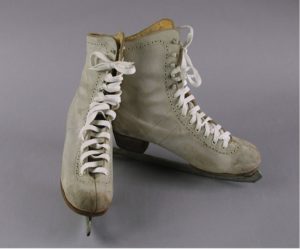
Skating Through Winter
By the 1850s, better-designed skates and interest in healthful outdoor activities made ice skating an increasingly popular leisure activity.
Read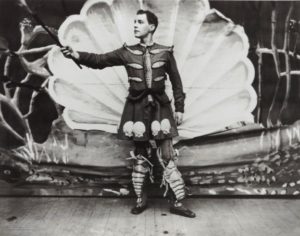
Chick Austin Modernizes a Connecticut Institution
Arthur Everett “Chick” Austin Jr., director of the Wadsworth Atheneum from 1927 to 1944, put Hartford on the cultural map.
Read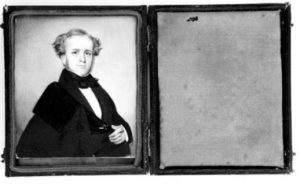
Horace Wells Discovers Pain-free Dentistry
This Hartford dentist played key role in the development of anesthesia but competing claims to discovery obscured his accomplishment.
Read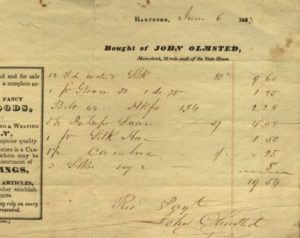
An Inconvenient Season: Charlotte Cowles’s Letters from December 1839
Letters between a sister in Farmington and a brother in Hartford reveal details about daily life at a time when the distance between the two communities wasn’t so easily traveled.
Read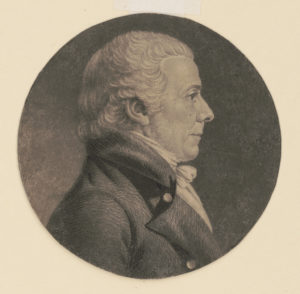
The Revolution of 1817
The Connecticut gubernatorial election of 1817 transferred power from the Federalists to the Republican Party, ending the Congregational Church’s domination.
Read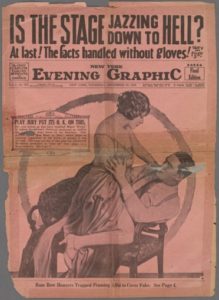
Emile Gauvreau and the Era of Tabloid Journalism
Emile Gauvreau, former managing editor of the Hartford Courant, became a pioneer in the rise of tabloid journalism.
Read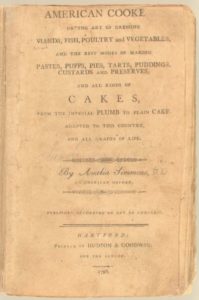
Give Thanks for American Cooking
Widely accepted as the first cookbook written by an American, Amelia Simmons’s American Cookery was published by Hudson & Goodwin of Hartford in 1796.
Read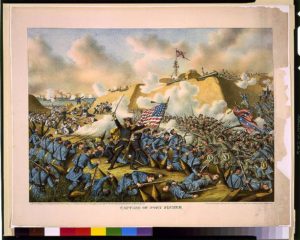
Alfred Howe Terry Born in Hartford – Today in History: November 10
Alfred Howe Terry’s greatest achievement in the Civil War was his capture of Fort Fisher in January, 1865.
Read
Taking on the State: Griswold v. Connecticut
In the 1960s, Estelle Griswold challenged Connecticut’s restrictive birth control law, making it all the way to the Supreme Court.
Read
The “Red Scare” in Connecticut
The Palmer Raids, launched in Connecticut in 1919, were part of the “Red Scare” paranoia that resulted in numerous civil rights violations committed by law enforcement officials.
Read
Drawing (on) the Connecticut Landscape: Benjamin Hutchins Coe Teaches Americans the Democratic Art
Benjamin Hutchins Coe helped teach Americans how to draw through the publication of numerous art manuals, many focused on Connecticut-inspired landscapes.
Read
West Indians in Hartford
A significant wave of immigration to the United States from the West Indies began in the 1940s, spurred by labor shortages during World War II.
Read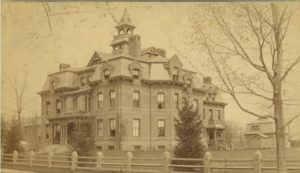
Yung Wing’s Dream: The Chinese Educational Mission, 1872-1881
In all, 120 Chinese students came to live and study in New England. When they returned home, they served as diplomats, engineers, naval officers, physicians, educators, administrators, and magistrates.
Read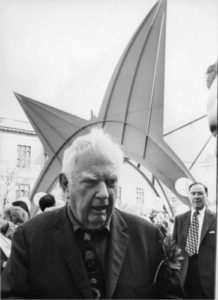
Calder’s Stegosaurus Dedicated – Today in History: October 10
On October 10, 1973, Alexander Calder’s sculpture, Stegosaurus, was dedicated in Hartford.
Read
Typing History
Home to companies such as Royal and Underwood, Connecticut became an important manufacturing center for typewriters in the early 20th century.
Read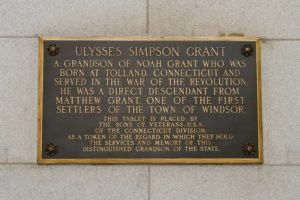
Unveiling of the Grant Memorial Tablet – Today in History: October 4
On October 4, 1916, the Ulysses Simpson Grant Memorial Tablet was officially unveiled in the north lobby of the Connecticut State Capitol building in Hartford.
Read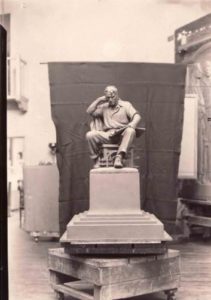
Evelyn Beatrice Longman Commemorates the Working Class
“Industry,” also known as “The Craftsman,” by Evelyn Longman, resides in Hartford and is a celebration of the working class and their contribution to society.
Read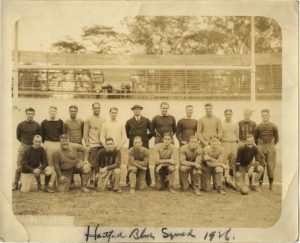
When the NFL Played in Connecticut: The Hartford Blues
In 1926, the Hartford Blues became the first and only NFL team to call Connecticut home. After a disappointing season, the NFL voted them out of the league.
Read
Thomas Hooker: Connecticut’s Founding Father
A powerful and popular preacher, Thomas Hooker led a group of Puritans out of Massachusetts in 1636 to settle new lands that eventually became the city of Hartford.
Read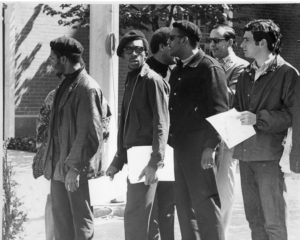
The Rise of the Black Panther Party in Connecticut
The Black Panther Party in Connecticut fought for an end to discriminatory legal and regulatory practices, often clashing with authorities to achieve their goals.
Read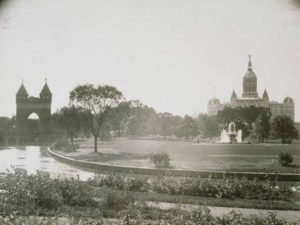
Soldiers and Sailors Memorial Arch – Today in History: September 17
In 1886, the Soldiers and Sailors Memorial Arch was dedicated to honor the 4,000 Hartford residents who served, and the nearly 400 who died, in the Civil War.
Read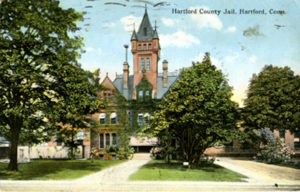
The Deplorable History of Hartford’s Seyms Street Jail
Abhorrent conditions characterized life in Hartford’s Seyms Street Jail for much of its century-long service to the county.
Read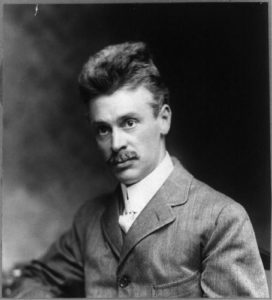
A Diversified Mind: Hiram Percy Maxim
No matter his field of endeavor—from automotive design to wireless radio—this multitalented creator had a hand in key developments of the early 1900s.
Read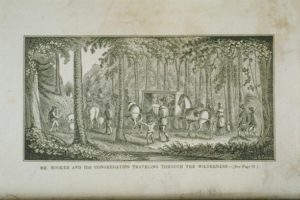
The Importance of Being Puritan: Church and State in Colonial Connecticut
Connecticut Protestants wanted to cleanse the church of what they saw as corruption, and to return to the simplicity and purity of early Christian worship.
Read
Serving Up Justice: Hartford’s Black Workers Organize
The earliest labor union for African American workers in Hartford appeared in 1902 with the birth of the Colored Waiters and Cooks Local 359.
Read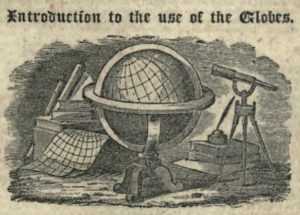
Connecticut Revolutionized Geography – Who Knew?
In 1828, Jesse Olney published A Practical System of Modern Geography, which revolutionized the way the subject was taught in schools during the 19th century.
Read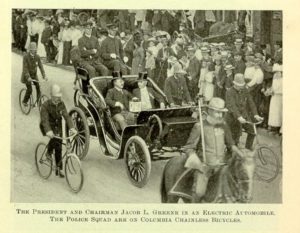
Roosevelt Rides in an Electric Car – Today in History: August 22
On August 22, 1902, President Theodore Roosevelt rode through the streets of Hartford in an electric automobile.
Read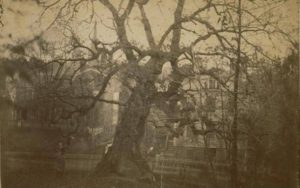
The Charter Oak Fell – Today in History: August 21
On August 21, 1856, the Charter Oak, a noted landmark and symbol of Hartford and Connecticut, fell during a severe wind and rain storm.
Read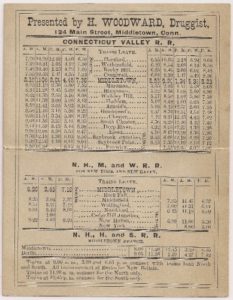
Connecticut Valley Railroad’s First Train – Today in History: July 29
On July 29, 1871, a ceremonial train ran along the new 44-mile track built by the Connecticut Valley Railroad.
Read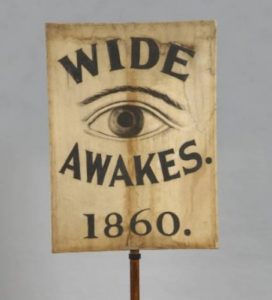
Hartford Wide-Awakes – Today in History: July 26
On July 26, 1860, the Hartford Wide-Awakes welcomed the Newark, New Jersey, Wide-Awakes to a banquet and ratification meeting at Hartford’s City Hall.
Read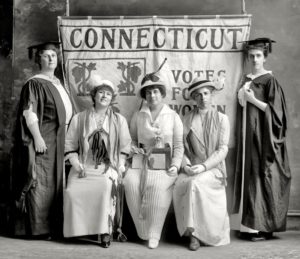
Connecticut Suffragists Appeal to the President – Today in History: July 12
On July 12, 1918, Connecticut suffragists rallied in Hartford and Simsbury to appeal to President Woodrow Wilson for help in getting women the right to vote.
Read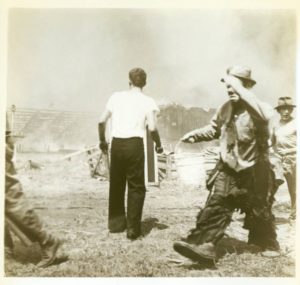
The Hartford Circus Fire – Today in History: July 6
Called the worst disaster in Hartford’s history, the fire killed 168 and injured 487, including many children.
Read
An Artist’s Life in Hartford: The Early Career of Dwight Tryon
Hartford native Dwight Tryon enjoyed a long, successful career as a landscape painter and teacher with studios in New York City and Massachusetts.
Read
J. P. Morgan’s Connecticut Roots
One of the great financiers of the late 19th and early 20th century, J. P. Morgan was born (and spent much of his youth) in Hartford, Connecticut.
Read
Hooker’s Journey to Hartford
In early June 1636, Puritan religious leader Reverend Thomas Hooker left the Boston area with one hundred men, women, and children and set out for the Connecticut valley.
Read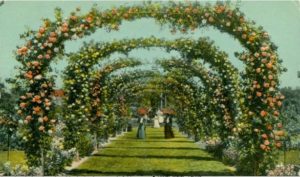
Elizabeth Park’s Rose Garden: June is Busting Out All Over
Boasting 15,000 bushes and about 800 varieties of roses, it is the oldest municipally operated rose garden in the country.
Read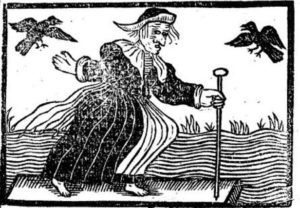
Alse Young Executed for Witchcraft – Today in History: May 26
On May 26, 1647, Alse Young of Windsor was the first person on record to be executed for witchcraft in the 13 colonies.
Read
Modernism in Connecticut through Photographs
A creed as much as a style, Modernism rejected the forms of the past in favor of an architecture that reflected a new spirit of living.
Read
Charles Dudley Warner: 19th Century Writer and Social Commentator
Author Charles Dudley Warner penned significant volumes of work, leaving an impact through his enduring social commentary in the second half of the 19th century.
Read Artist Frederic Church Born – Today in History: May 4
On May 4, 1826, the great American landscape painter Frederic Edwin Church was born to a wealthy Hartford family.
Read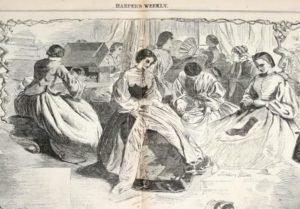
Crisis Management during the American Civil War: The Hartford Soldiers’ Aid Society
The Hartford Soldiers’ Aid Society was one of the most important relief organizations during the Civil War and provided new opportunities for women in the public sphere.
Read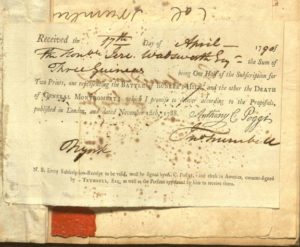
Jeremiah Wadsworth, “foremost in every enterprise”
Jeremiah Wadsworth was a sea-going merchant, commissary general to the Continental army, and founder of the nation’s first banks.
Read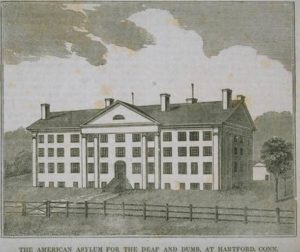
Gallaudet’s Vision Advances Deaf Education
Thomas Hopkins Gallaudet is acclaimed today for pioneering education for the deaf in the US and establishing the American School for the Deaf in Connecticut.
Read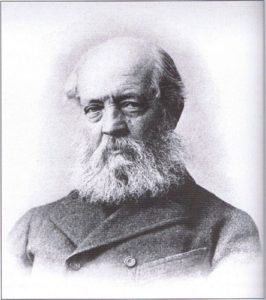
Landscape Architecture Helps in Healing – Who Knew?
Frederick Law Olmsted re-designed the grounds on the campus of the Hartford Retreat for the Insane to help induce healing and serenity.
Read
Child Labor in Connecticut
While Connecticut proved to be one of the more progressive states when it came to child labor laws, it still took federal legislation to protect children in the workplace.
Read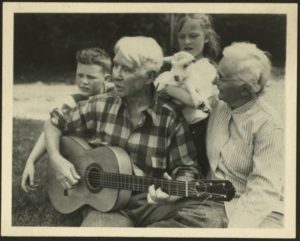
Carl Sandburg, Poet from the Grassroots, Reaches Connecticut Audiences
Popular poet, singer, and activist Carl Sandburg had numerous connections to Connecticut and promoted social reform in the early 20th century.
Read
The Hartford Whalers: Connecticut’s Last Major League Sports Franchise
Major league hockey debuted in Hartford in 1975 and the Hartford Whalers remained a staple of the Connecticut landscape for twenty-three years.
Read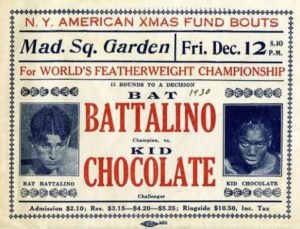
Battling Bat Battalino: One of Hartford’s Heroes
A tenacious and long-lasting boxer, Battalino went on to win the world professional featherweight championship.
Read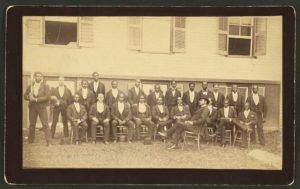
Swinging for the Fences: Connecticut’s Black Baseball Greats
In Connecticut, African Americans played organized baseball as early as 1868, some of the game’s biggest stars played for teams throughout the state.
Read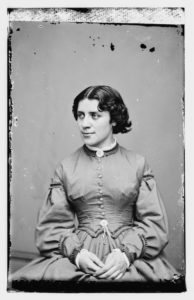
Anna Elizabeth Dickinson at Touro Hall – Today in History: March 24
On March 24, 1863, Anna Elizabeth Dickinson, a 20-year-old Quaker and abolitionist from Pennsylvania, spoke at Hartford’s Touro Hall.
Read
Joseph Taborsky and the “Mad Dog Killings”
Joseph “Mad Dog” Taborsky earned his nickname for the brutal methods he employed robbing and murdering his victims.
Read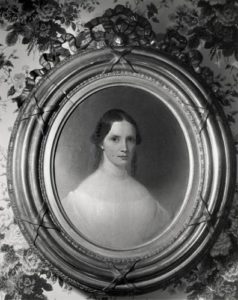
Looking Back: Tempest Tossed, the Story of Isabella Beecher Hooker
Isabella Beecher was a suffragist and spiritualist who shunned traditional female roles while alienating large parts of her family during her brother’s adultery scandal.
Read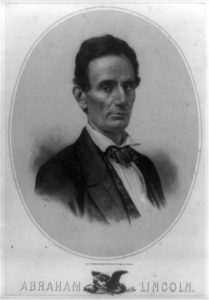
Abraham Lincoln’s Republican Rally – Today in History: March 5
On March 5, 1860, Abraham Lincoln addressed the Republicans of Hartford at City Hall.
Read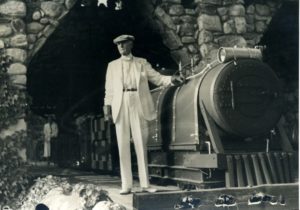
Holmes at Home: The Life of William Gillette
William Gillette was an American actor, playwright, and stage director most famous for his stage portrayal of Sherlock Holmes and for the stone castle he built in East Haddam.
Read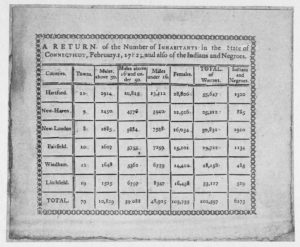
Connecticut’s Black Governors
For approximately one hundred years, Connecticut’s “Black Governors” were used by white authorities to help maintain order among the black population.
Read Jackson v. Bulloch and the End of Slavery in Connecticut
Nancy Jackson sued for her freedom in 1837. Her victory helped further the abolitionist cause in a state slowly moving toward outlawing slavery.
Read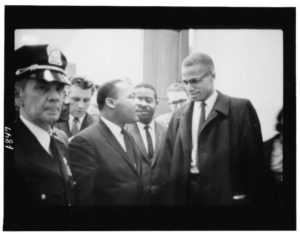
Malcolm X in Hartford: “Our Mission is Not Violence but Freedom”
In addition to helping found Nation of Islam Temple No. 14 in Hartford, Malcolm X spent considerable time in Connecticut rallying supporters to his cause.
Read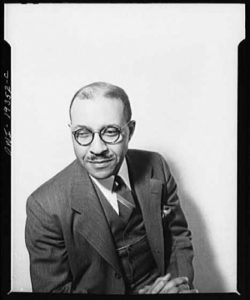
Hartford’s Great Migration through Charles S. Johnson’s Eyes
During the Great Migration of the early 1900s, African Americans from the rural South relocated to Hartford and other Northern cities in search of better prospects.
Read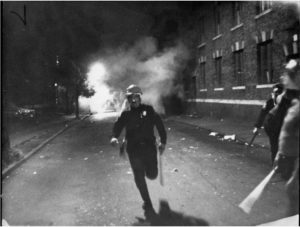
The Language of the Unheard: Racial Unrest in 20th-Century Hartford
Race riots in Hartford during the 1960s came about thanks to a century of frustration and political inaction surrounding disparate standards of living among different races and ethnicities,
Read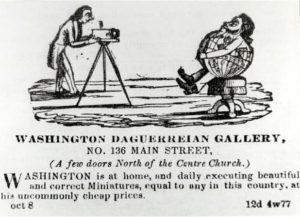
Augustus Washington (1820 – 1875): African American Daguerreotypist
Though his work depicts people of different classes and cultures, ironically, no portraits of African Americans survive from his years in Hartford.
Read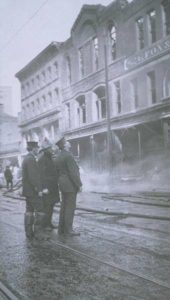
G. Fox & Co. Destroyed by Fire – Today in History: January 29
On January 29, 1917, watchmen discovered a fire on the ground floor of the G. Fox & Co. building complex located on Main Street in Hartford.
Read
Ernest Borgnine: Breaking the Hollywood Mold
Ernest Borgnine, a native of Hamden who served ten years in navy, became one of the world’s most recognized and revered actors.
Read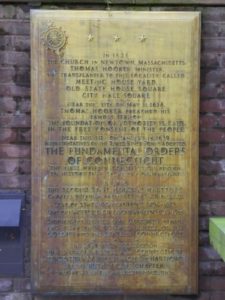
The Fundamental Orders: Connecticut’s Role in Early Constitutional Government
The Fundamental Orders represent what many consider to be the first written constitution in the Western world.
Read
Sam Colt’s Funeral: The Day Hartford Stopped
The funeral of America’s first great munitions maker was spectacular—certainly the most spectacular ever seen in the state’s capital city.
Read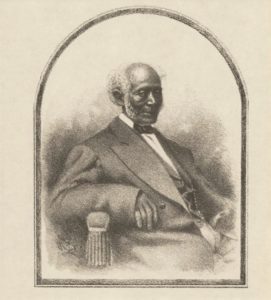
James Williams, More than Trinity College’s Janitor
James Williams was an escaped slave who became a janitor at Trinity College from the institution’s founding in 1823 until his death in 1878.
Read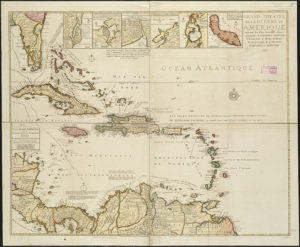
Connecticut and the West Indies: Sugar Spurs Trans-Atlantic Trade
This profitable exchange brought wealth and sought-after goods to the state but came at the price of supporting slavery in the bargain.
Read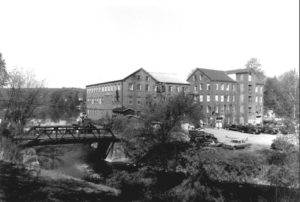
Buckling Up For Auto Safety
Connecticut joined several other states and the District of Columbia mandating seat belt usage for children and adults in automobiles in 1985.
Read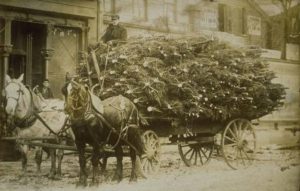
O Christmas Tree!
On December 25, 1890, The Hartford Courant reported that Christmas Eve had seen crowded stores and train delays of up to an hour due to heavy travel.
Read
Barkhamsted Reservoir Construction Washes Away a Community
While the Barkhamsted Reservoir project proved successful, it cost 1,000 displaced residents their homes and livelihoods.
Read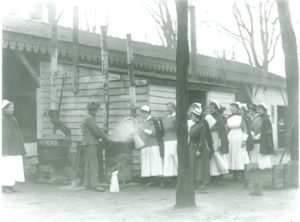
Ruth Hovey: Heroic Battlefield Nurse
A 28-year-old nurse from Hartford, Ruth Hovey served on the battlefields of World War I.
Read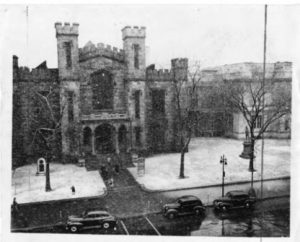
The Atheneum Joins War Effort – Who Knew?
The Wadsworth Atheneum contributed to home front morale and fundraisers during World War II.
Read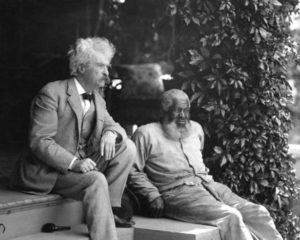
A Life Lived in a Rapidly Changing World: Samuel L. Clemens
Samuel Clemens experienced America’s rapid change—from westward expansion to industrialization‚ the end of slavery‚ advancements in technology‚ and foreign wars.
Read
Beatrice Fox Auerbach: Retail Pioneer Led Iconic Family Department Store
Beatrice Fox Auerbach was pioneering retail executive who ran the G. Fox & Co. department store and numerous philanthropic benefiting people in Hartford and around the world.
Read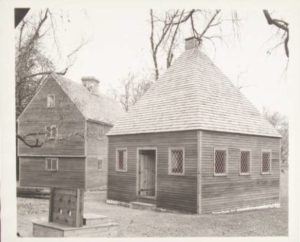
What’s a Puritan, and Why Didn’t They Stay in Massachusetts?
Mean-spirited, repressed souls or persecuted refugees and rugged egalitarians? Connecticut’s state historian sets the record straight.
Read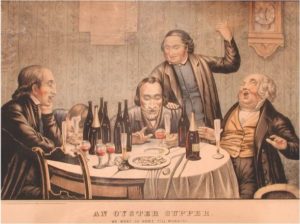
Any Month with an “R” in It: Eating Oysters in Connecticut
Lack of refrigeration and higher bacteria counts in tidal waters once made summer months a dangerous time to eat oysters.
Read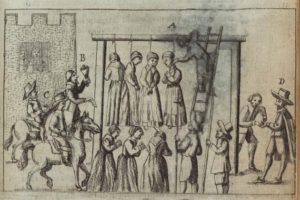
Witchcraft in Connecticut
Well before the Salem trials, Connecticut residents were executing “witches.” Connecticut is home to what was most likely the first execution of its kind in colonial America.
Read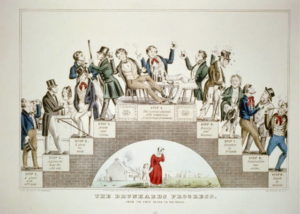
The Temperance Movement in Connecticut – Today in History: October 27
On October 27, 1841, the steamboat Greenfield traveled down the Connecticut River, transporting people to the Temperance Convention in Middletown.
Read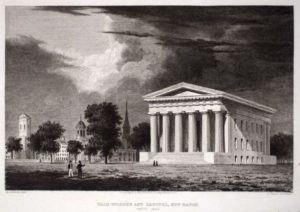
Hartford and New Haven: A Tale of Two Capitals
Before the expense of having two capital cities became too great, both Hartford and New Haven served that function. Hartford became the sole capital in 1875.
Read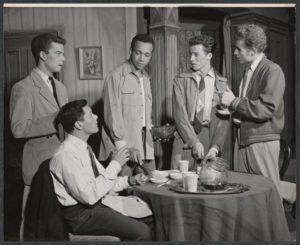
Hartford’s Louis Peterson, Groundbreaking African American Playwright
Hartford’s Louis Peterson was a groundbreaking African American playwright in the 20th century.
Read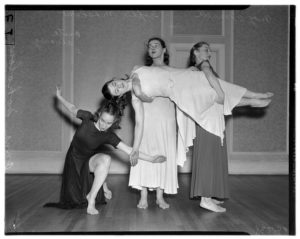
Hartford’s Anna Sokolow, Modern Dance Pioneer
Hartford’s Anna Sokolow became one of the most important figures in modern dance during the 20th century.
Read
Hartford’s “Little Italy”
In the early 1900s, Italians made new lives for themselves in Hartford.
Read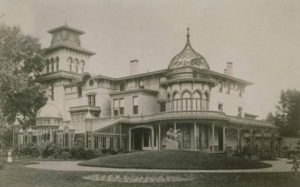
Elizabeth Jarvis Colt Born – Today in History: October 5
On October 5, 1826, Elizabeth Jarvis was born in Hartford.
Read
The 1961 Hartford Hospital Fire
On December 8, 1961, the casual disposal of a cigarette spread raging flames and deadly smoke through Hartford Hospital.
Read
The 42-Day Income Tax
In 1971, to eliminate the state’s budget deficit, Connecticut legislators approved a tax on income. Just forty-two days later, they repealed it, instead voting to increase the state’s sales tax.
Read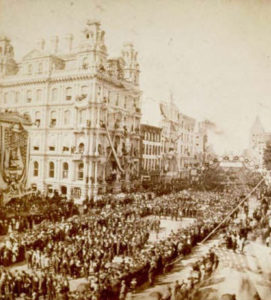
A Day of Celebration – Today in History: September 17
September 17, 1879 was a day of celebration in the City of Hartford when more than 100,000 people came to the city to celebrate Battle Flag Day.
Read
Painter, Muralist, Sculptor Sol LeWitt born – Today in History: September 9
Sol LeWitt, whose work includes drawings and sculptures, is identified with the late 20th century Minimalist and Conceptual art movements.
Read
Hartford’s Les Payne, Trailblazing Journalist
Les Payne grew up in Hartford and became one of the best-known African-American journalists in the United States.
Read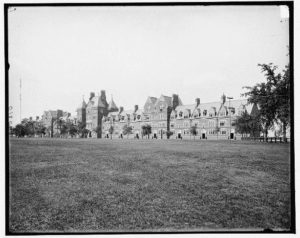
Trinity College – Scholarship and Community Engagement
Founded in 1823, Trinity College has evolved alongside the city of Hartford for nearly 200 years.
Read
Pope Park – Yesterday and Today
Once the proposed site of Albert Pope’s industrial village, Pope Park has served the recreation needs of the Hartford community for over one hundred years.
Read
Poet Wallace Stevens Dies – Today in History: August 2
On August 2, 1955, the great American poet Wallace Stevens died at St. Francis Hospital in Hartford.
Read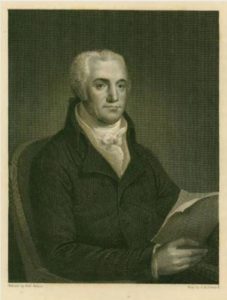
The Hartford Wits
Eventually taking the name the “Hartford Wits,” influential figures of the 18th century got together to write poetry that documented the state of the times.
Read
A Revolution On Two Wheels: Columbia Bicycles
Albert Pope’s company not only played a prominent role in developing improved bicycle designs, it also developed the market for them.
Read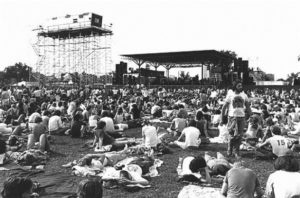
Colt Park and the Magical Summer of 1976
In the summer of 1976, Colt Park offered rock and roll fans an escape from troubled times through a series of concerts by some legendary acts.
Read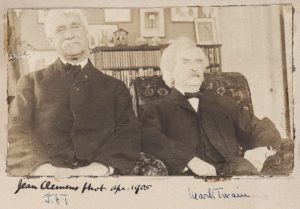
Joseph Hopkins Twichell: Asylum Hill’s Religious Leader and Mark Twain’s Closest Friend
Inspired by his friendship with Mark Twain, Joseph Twichell took up such causes as labor rights, immigration, education, and interfaith advocacy.
Read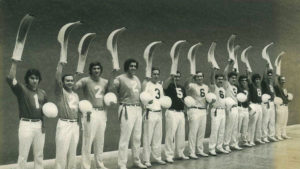
“The Basque Game in Town”: The Heyday of Jai Alai in Connecticut
Organized jai alai came to Connecticut in the 1970s, but charges of corruption soon brought the sport to an end in the Nutmeg State.
Read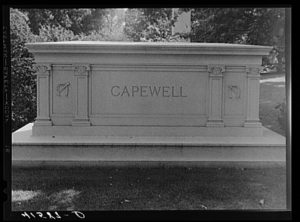
Horseshoe Nail Capital of the World – Who Knew?
In the late 19th century, George Capewell formed the Capewell Horse Nail Company, which mass produced horseshoe nails.
Read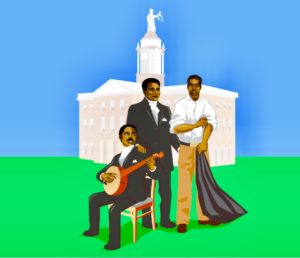
Early Civil Rights and Cultural Pioneers: The Easton Family
For a variety of reasons, the Eastons were one of New England’s most notable 19th-century African American families.
Read
Samuel L. Clemens Receives Scrap-book Patent – Who Knew?
Writer and humorist Samuel Langhorne Clemens, better known by his pen name Mark Twain, invented more than tall tales and novels.
Read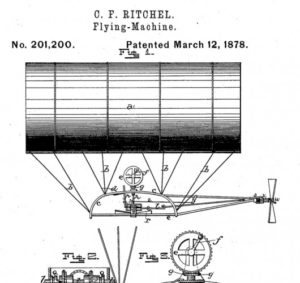
Flying High with Early Dirigible
In what would later be described as “the first flight of a man-carrying dirigible in America,” aeronaut Mark Quinlan piloted a machine designed and patented by Charles F. Ritchel.
Read
The Hartford Insurance Investigator With the Action-Packed Expense Account
Based in Hartford, “Yours Truly, Johnny Dollar” was one of America’s most popular radio shows during the 15 years it aired.
Read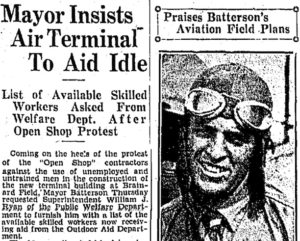
“Something to Show for Our Work”: Building Brainard Airport
At the height of the Great Depression, unemployed men living around Hartford, became a cheap source of labor to help build Brainard airport.
Read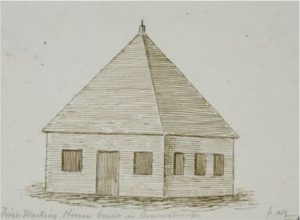
The Free Consent of the People: Thomas Hooker and the Fundamental Orders
Government formed with the consent of the people was a radical idea in the age of nations ruled by monarchs, emperors, and tsars.
Read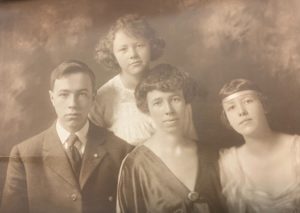
Josephine Bennett: Hartford’s City Mother
By linking disparate social and political movements of the early 20th century, activist Josephine Bennett was “intersectional” well before the term was invented.
Read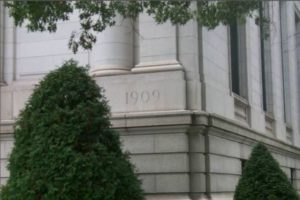
Cornerstone Set – Today in History: May 25
On May 25, 1909, the cornerstone was laid for the new State Library and Supreme Court building in Hartford.
Read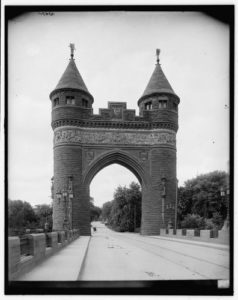
The Soldiers and Sailors Memorial Arch, Hartford
Situated in Bushnell Park, the Soldiers and Sailors Memorial Arch honors the more than 4,000 Hartford men who fought for the Union during the Civil War.
Read
Albert Pope Pioneered Bicycles for Women
Hartford-based inventor Albert Pope saw his first bicycle at the 1876 Centennial Exposition in Philadelphia and was so impressed that he went to Europe to study how bicycles were made.
Read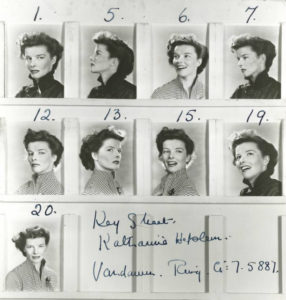
Katharine Hepburn’s Love Affair (with Connecticut)
One of the most popular actresses of the 20th century, Katharine Hepburn was born in Hartford and lived much of her later life in Old Saybrook.
Read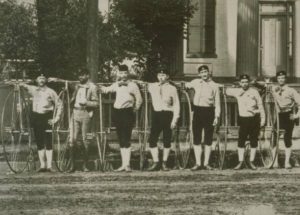
The Hartford Wheel Club: Disparity in the Gilded Age
Despite the wealth found in some sections of the city, the economic volatility of the Gilded Age produced hard times for residents of Hartford.
Read
The American School for the Deaf – Today in History: April 15
On April 15, 1817, the Connecticut Asylum for the Education and Instruction of Deaf and Dumb Persons opened with seven pupils in Hartford.
Read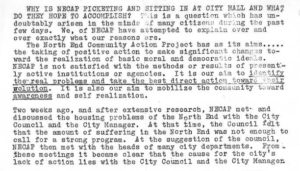
The Northern Student Movement
The Northern Student Movement motivated college students to contribute their energies to important social causes such as literacy and civil rights.
Read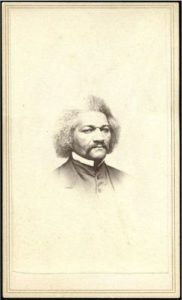
Speaking under the Open Sky: Frederick Douglass in Connecticut
The famous abolitionist Frederick Douglass had several connections to Connecticut, including run-ins with a number of the state’s vocal slavery proponents.
Read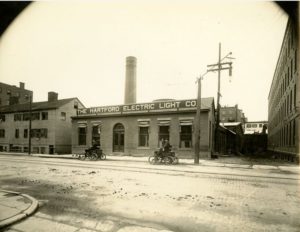
Let There Be Light: An Early History of the Hartford Electric Light Company
As cities switched from gas lamps to electric lighting, one observer noted that Hartford was “far in the lead of any other city in the world in the use of electricity for light and power per capita.”
Read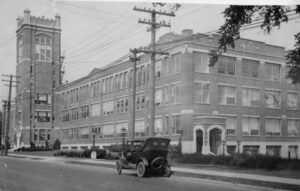
Hartford’s Fuller Brush Company Goes Door-to-Door Across US
Founded in 1906 by Alfred C. Fuller, the Fuller Brush Company was one of Connecticut’s most notable corporations.
Read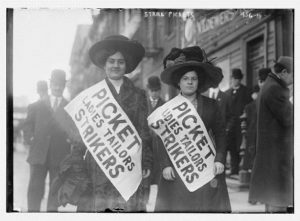
Triangle Shirtwaist Fire: Connecticut Lessons from a Tragedy
While the Triangle Shirtwaist fire in New York City is one of the most famous tragedies behind the organized labor movement, Connecticut had its share of equally dangerous work environments in the early 20th century.
Read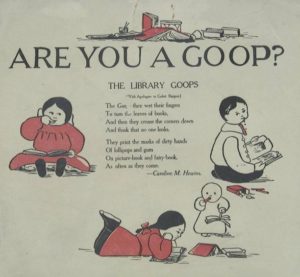
The Public Library Movement: Caroline Hewins Makes Room for Young Readers
This Hartford librarian played a leading role in national efforts to transform libraries into public centers that welcomed patrons from all walks of life.
Read Where It All Happened: Connecticut’s Old State House
Connecticut’s Old State House is a memorial to many of the legislative advances made in Connecticut during the most formative years of the United States.
Read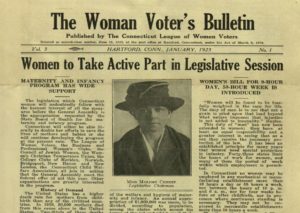
A Day for Women – Today in History: March 8
Women’s fight for the right to vote in the Constitution State may be dated to 1869, when the Connecticut Woman Suffrage Association (CWSA) was organized.
Read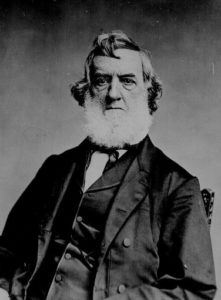
Gideon Welles Appointed Lincoln’s Secretary of the Navy – Today in History: March 7
On March 7, 1861 Gideon Welles was officially appointed into Abraham Lincoln’s cabinet as Secretary of the Navy.
Read
Today in History – Fales & Gray Explosion Underscores Need for a Hartford Hospital
At 2 pm on March 2, 1854, the power of steam incorrectly managed and harnessed wreaked havoc at the railroad-car factory Fales & Gray Car Works in Hartford.
Read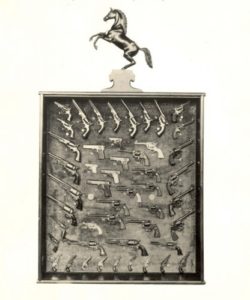
The Revolving Gun – Today in History: February 25
On February 25, 1836, Samuel Colt received a patent for a “revolving gun” US patent number 138, later known as 9430X.
Read
Fire and Ice: A Very Bad Week in 1914
Hartford’s Union Station and Allyn Hall caught fire on two different days in February. Only one still stands today.
Read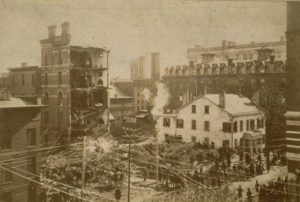
Park Central Hotel Boiler Explosion – Today in History: February 18
In the pre-dawn hours of February 18, 1889, the Park Central Hotel in Hartford was ripped apart by a steam boiler explosion.
Read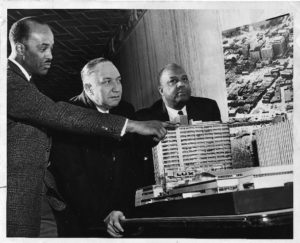
Constitution Plaza Then and Now
Hartford’s first major redevelopment project, Constitution Plaza was built as part of the urban renewal initiatives in the 1950s and ’60s.
Read
The Interstate Highway System Comes to Hartford
The building of I-84 and I-91 may have increased interstate transportation, but city planners and special interest groups continue to grapple with the legacy of these projects.
Read
Colt Armory Burns – Today in History: February 4
On February 4, 1864, most of Colt’s East Armory, located in Hartford, burned to the ground.
Read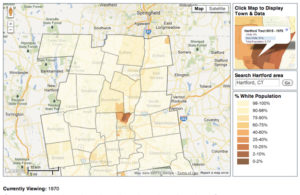
How Real Estate Practices Influenced the Hartford Region’s Demographic Makeup
Persistent segregation is the historic legacy of steering and blockbusting, two discriminatory tactics that played a role in shaping suburban neighborhoods.
Read
The Astronomical Event of the Century
Church bells chimed and factory whistles blew and automobiles, trains, and trolleys throughout the state came to a standstill.
Read
Almost a Tragedy: The Collapse of the Hartford Civic Center
In the early morning of January 18, 1978, the roof of the sports coliseum collapsed onto 10,000 empty stadium seats.
Read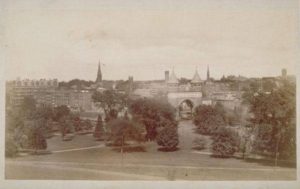
Land Purchase Becomes Bushnell Park – Today in History: January 5
On January 5, 1854, Hartford voters approved spending over $100,000 in public funds for land that would become a municipal park.
Read
Hartford Publishes the First Literary Work by an African American – Who Knew?
Jupiter Hammon, who endured life-long enslavement, became the first African American writer to be published in America when his 88-line poem, “An Evening Thought: Salvation by Christ with Penitential Cries”, was published.
Read
“Negroes Who Stand Up and Fight Back” – Paul Robeson in Hartford
Called the “greatest mobilization of police in the city’s history,” the event that brought law enforcement out in force to Keney Park was not a riot, not a strike, but a concert by this singer-actor and activist.
Read
Honor and Duty: The Life of Alfred Howe Terry
Born in Hartford, Alfred Howe Terry studied law before heroically capturing Fort Fisher during the Civil War.
Read
The Hartford Circus Fire
As a result of the Hartford Circus Fire of 1944, Connecticut enacted new, strict fire safety regulations for public performances.
Read
Charlotte Perkins Gilman Born – Today in History: July 3
On July 3, 1860, Charlotte Anna Perkins (Charlotte Perkins Gilman) was born in Hartford, Connecticut.
Read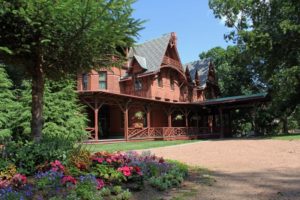
Where Mr. Twain and Mrs. Stowe Built Their Dream Houses
This bucolic oasis on Hartford’s western edge became home to great literary talents, social reformers, politicians, and other nationally-regarded luminaries of the mid-to-late 1800s.
Read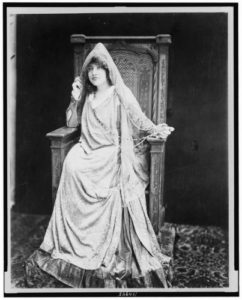
Sarah Bernhardt Performs in Hartford – Today in History: June 8
On June 8, 1906, French stage and film actress Sarah Bernhardt appeared at Foot Guard Hall in Hartford.
Read
An Orderly & Decent Government: Making Self-Government Work, 1888-1905
Connecticut’s ancient system of town-based representation ensured the continuation of small town values and perspectives.
Read An Orderly & Decent Government: Making Self-Government Work, 1634-1776
In 1698 the General Court reorganized itself to deal more effectively with Connecticut’s complex new problems.
Read An Orderly & Decent Government: Searching for the Common Good, 1819-1865
During the early 19th century, the General Assembly was slow to deal with rising crime, poverty and the other social costs of a rapidly changing society.
Read An Orderly & Decent Government: Making Self-Government Work, 1819-1865
In the mid-19th century, Connecticut looked toward changing its electoral processes as well as its civil rights record.
Read An Orderly & Decent Government: Significant Events & Developments, 1905-1929
Early 20th century life in Connecticut was marked by the election of 1912, US entry into World War I, and the Great Depression.
Read An Orderly & Decent Government: Making Self-Government Work, 1866-1887
The late 1800s witnessed significant challenges to Connecticut’s voting and taxation laws.
Read An Orderly & Decent Government: Significant Events & Developments, 1929-1964
The era of Wilbur Cross and the Great Depression transitioned into World War II and state control by Democrat mastermind John Bailey.
Read An Orderly & Decent Government: Significant Events & Developments, 1965-Now
Connecticut recast its constitution, reapportioned its House and Senate, and struggled with providing equal rights to all races and socio-economic classes in the state.
Read An Orderly & Decent Government: Searching for the Common Good, 1965-Now
The state generated revenue for urban renewal and social programs through gaming and income tax initiatives.
Read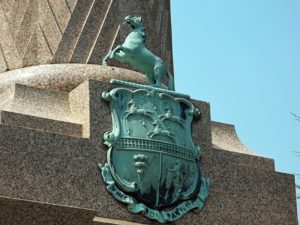
The Colt Memorial, Cedar Hill Cemetery
Commissioned by Samuel Colt’s wife, Elizabeth Jarvis Colt, and James G. Batterson designed the Colt memorial monument in Hartford’s Cedar Hill Cemetery.
Read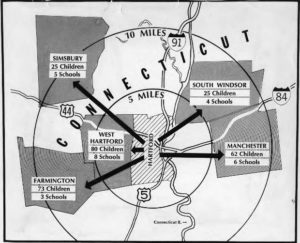
Sheff v. O’Neill Settlements Target Educational Segregation In Hartford
This landmark case not only drew attention to inequalities in area school systems, it focused efforts on reform.
Read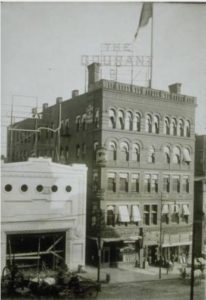
The Hartford Courant: The Oldest US Newspaper in Continuous Publication
On October 29, 1764, New Haven printer Thomas Green began publishing The Hartford Courant (then known as The Connecticut Courant) in Hartford, Connecticut.
Read
Catharine Beecher, Champion of Women’s Education
Sister to two of the most famous figures of the 19th century–Harriet Beecher Stowe and Henry Ward Beecher–Catharine Esther Beecher achieved fame in her own right as an educator, reformer, and writer.
Read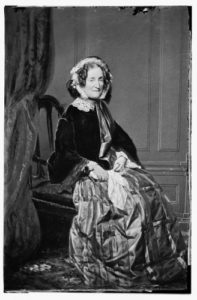
Miss Huntley’s School Opens – Today in History: August 1
On August 1, 1814, a young teacher named Lydia Huntley opened a school for young women in Hartford.
Read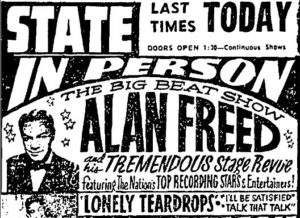
Rock and Roll vs. Racism
The State Theater in Hartford brought residents of all different backgrounds together in the 1950s and ’60s through the spirit of rock ‘n’ roll.
Read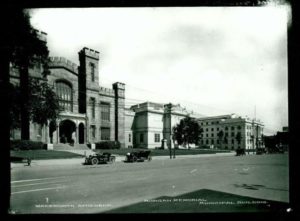
The Wadsworth Atheneum Museum of Art
Founded in 1842, this ever-evolving institution is the oldest, continuously operating public art museum in the United States.
Read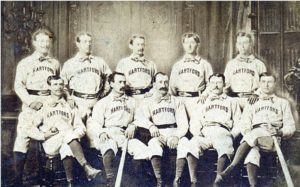
Diamonds of the Past: Hartford’s Lost Ball Parks
Erected in 1874, Hartford’s earliest baseball stadium was the Base Ball Grounds in Colt Park, on the corner of Wyllys Street and Hendricxsen Avenue.
Read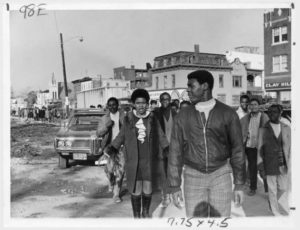
A First Amendment Lesson: Weaver High Students Teach Their Elders
In the 1960s, Hartford high school students published a controversial newspaper that sparked debates about freedom of speech and freedom of the press.
Read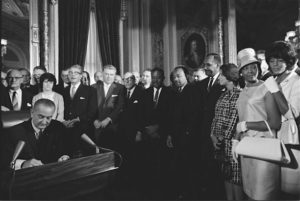
Selma, Not So Far Away
Father Leonard Tartaglia was sometimes called Hartford’s “Hoodlum Priest.” Like the 1961 film of the same name, Tartaglia ministered to the city’s poor and disenfranchised.
Read
Just Pour Over Ice – Who Knew?
The Heublein Restaurant served its thirsty customers pre-mixed cocktails that became so wildly popular they had to build a distillery just to meet demand.
Read
Five Minutes that Changed Connecticut: Simon Bernstein and the 1965 Connecticut Education Amendment
“There shall always be free public elementary and secondary schools in the state. The general assembly shall implement this principle by appropriate legislation.”
Read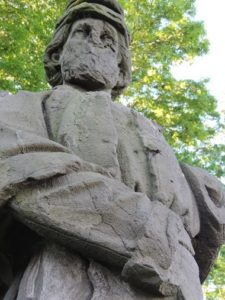
The Forlorn Soldier Statue
The Forlorn Soldier statue survived years of neglect, punishing weather, and efforts to tear it down.
Read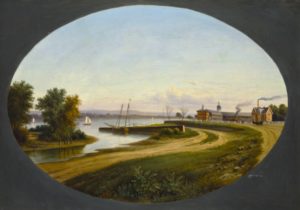
The Colt Patent Fire-Arms Manufacturing Company
Samuel Colt, the man who revolutionized firearms manufacturing in the United States, was born in Hartford, Connecticut, on July 19, 1814.
Read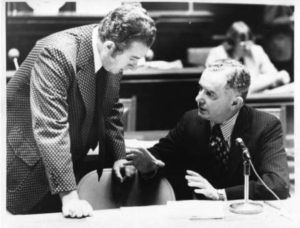
William O’Neill: Climbing Up the Political Ladder
Connecticut’s 84th governor, William Atchison O’Neill, was born in Hartford on August 11, 1930 but grew up in East Hampton.
Read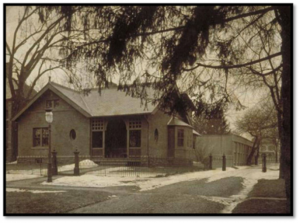
Hartford Retreat for the Insane Advanced Improved Standards of Care
In the 1800s, this Connecticut hospital stood at the forefront of medical practice in the US in its new approaches to the treatment of mental illness.
Read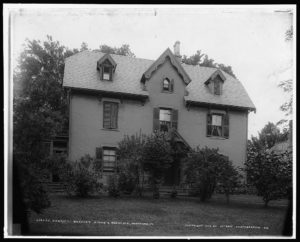
Hartford’s Nook Farm
This small enclave in the capital city’s west end became home to many of the 19th century’s most celebrated and creative personalities.
Read
From Frontier Town to Capital City: Collection Traces Hartford’s Transformation
How does a colonial town become a modern city? A unique collection, with documents dating to the 1630s, helps provide answers.
Read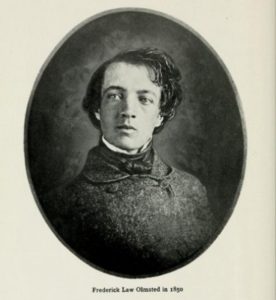
Frederick Law Olmsted Born – Today in History: April 26
On April 26, 1822, Frederick Law Olmsted was born in Hartford and became the founder of landscape architecture in America,
Read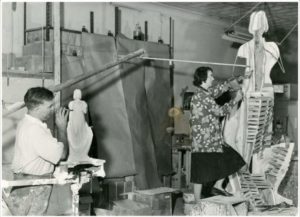
Frances Laughlin Wadsworth: Sculpting the Past
Her statues honor the famous, from Thomas Hooker and Helen Keller to Alice Cogswell, the first pupil of what became The American School for the Deaf.
Read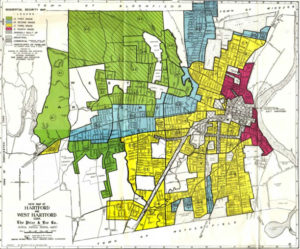
The Effects of “Redlining” on the Hartford Metropolitan Region
Historical data reveals long-term patterns of inequality that can be traced back to now-illegal practices adopted by federal and private lenders in the 1930s.
Read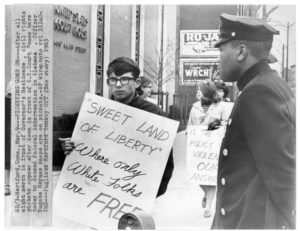
Hartford Protests in Support of Selma – Today in History: March 9
On March 9, 1965, protesters held an all-night vigil in front of Governor John Dempsey’s residence in support of the voter registration marchers in Selma, Alabama.
Read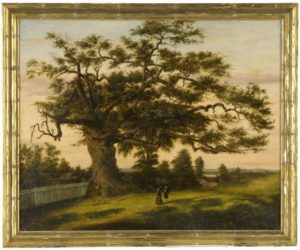
The Legend of the Charter Oak
The Charter Oak is a symbol of Connecticut’s enduring tradition of representative government and self-rule.
Read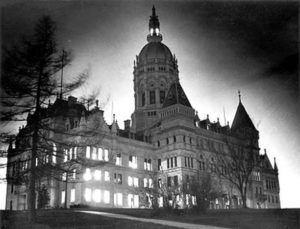
Connecticut State Capitol
Still in use today, the State Capitol continues to be a crucial site of lawmaking, state business, protest, advocacy, and more.
Read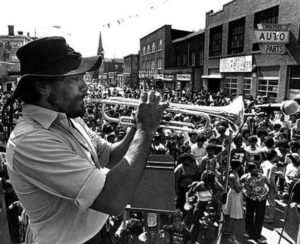
Park Street Festival, Hartford 1978
The Park Street Festival is an annual Puerto Rican celebration held in the heart of Hartford’s Puerto Rican community on Park Street.
Read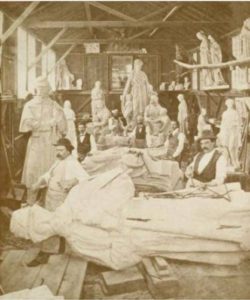
James G. Batterson, Stone Contractor
James G. Batterson was an artist, inventor, and businessman. He helped commemorate the Civil War through his proficiency with stone.
Read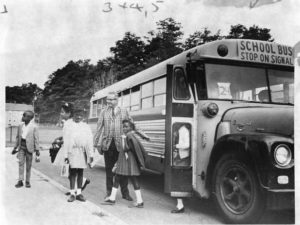
Connecticut Takes the Wheel on Education Reform: Project Concern
As one of the earliest voluntary busing programs in the US, Project Concern sought to address educational inequalities.
Read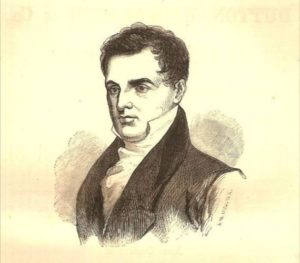
Medical Pioneer Eli Todd born – Today in History: July 22
On July 22, 1769, Eli Todd was born in New Haven and in 1824 became the first director of the Connecticut Retreat for the Insane in Hartford.
ReadMore Articles