



Other CT Humanities Programs

Creative Commons Licensing


News & Updates
Caleb Brewster and the Culper Spy Ring
Caleb Brewster used his knowledge of Long Island Sound to serve as a member of the Culper Spy Ring during the Revolutionary War.
Read
The Great River: Connecticut’s Main Stream
Highway. Barrier. Resource. Sewer. Over the centuries each of these names has been used to describe one of the defining feature’s of the state’s landscape.
Read
Trinity College – Scholarship and Community Engagement
Founded in 1823, Trinity College has evolved alongside the city of Hartford for nearly 200 years.
Read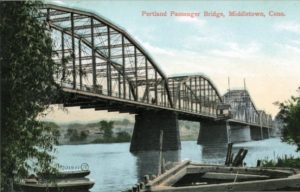
The Longest Highway Drawbridge – Who Knew?
In 1896, when the Middletown and Portland Bridge over the Connecticut River opened, it was the longest highway drawbridge in the world.
Read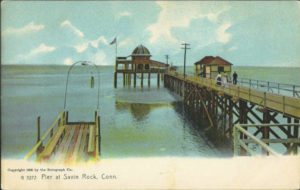
Savin Rock Park: “Connecticut’s Coney Island”
Savin Rock Park was a seaside resort constructed in the late 19th century in the modern-day town of West Haven.
Read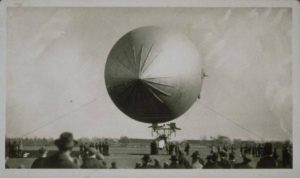
Airborne Pioneers: Connecticut Takes Flight
Daring flights and first-of-a-kind inventions mark the state’s 200-plus-year history of taking to the skies.
Read
Torrington Recovers after the Flood of ‘55
In August of 1955, two hurricanes that moved through Connecticut caused a devastating flood of the Naugatuck River.
Read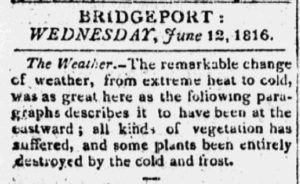
Eighteen-hundred-and-froze-to-death: 1816, The Year Without a Summer
Sunspots and volcanic eruptions led to cooler than normal temperatures in the summer of 1816.
Read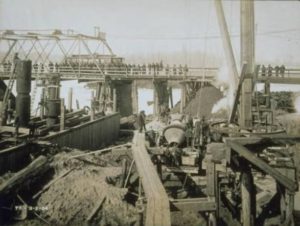
The Sand Hogs Set the Foundation for the Bulkeley Bridge
Toiling in dangerous conditions beneath the Connecticut River’s surface for only $2.50 a day, African American workers dug the foundation for the Bulkeley Bridge.
Read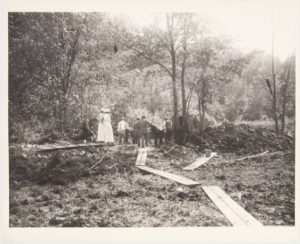
Mastodon Bones Unearthed – Today in History: August 13
On August 13, 1913, workmen unearthed the skeleton of a mastodon, in Farmington, while digging a trench on Alfred A. Pope’s farm and country estate, Hill-Stead.
Read
Intertwining Family Businesses
Emory Johnson, a farmer from Chatham, Connecticut, moved to East Haddam and operated one of the area’s most successful businesses of the late 19th century.
Read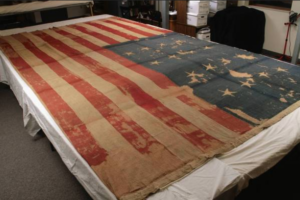
The Stonington Battle Flag
On August 10, 1814, during a lull in the attack by the British on Stonington, citizens nailed a large US flag–a banner of defiance–to a pole above the battery.
Read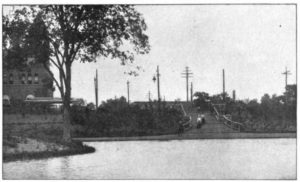
Pope Park – Yesterday and Today
Once the proposed site of Albert Pope’s industrial village, Pope Park has served the recreation needs of the Hartford community for over one hundred years.
Read
The Shoe Box Murder Mystery
On August 8, 1886, Edward Terrill and his dog uncovered what appeared to be a box of a dozen shoes that had recently fallen from a cart.
Read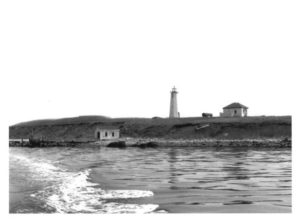
Improving Sea Transportation: Guilford Goes About it the Light Way
Approximately 3 ½ miles off the coast of Guilford lies the Faulkner’s Island Lighthouse.
Read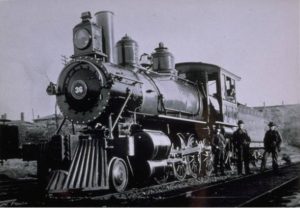
Steam Railroads Transform Connecticut Travel and Commerce
In 1832, the state chartered its first railroad and ushered in a new age of fast, and sometimes dangerous, regional transportation.
Read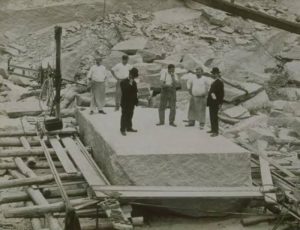
Branford’s History Is Set in Stone
Recognized for its superior quality, the polished rock that came out of Branford traveled by schooner or rail to points as far as Chicago and New Orleans.
Read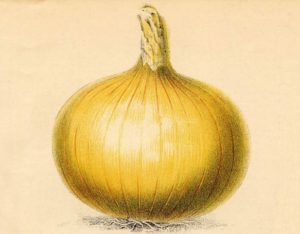
The Many Layers to Onion Farming in Westport
Westport’s fertile soil and ease of access by boat and rail once made it home to a thriving onion farming industry.
Read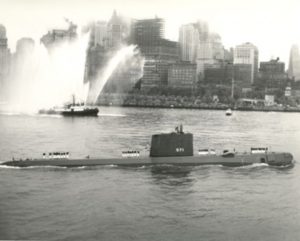
USS Nautilus Passes Under North Pole – Today in History: August 3
On August 3, 1958, the USS Nautilus (SSN-571) made history by becoming the first ship to pass underneath the North Pole.
Read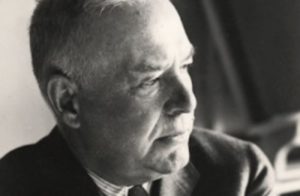
Poet Wallace Stevens Dies – Today in History: August 2
On August 2, 1955, the great American poet Wallace Stevens died at St. Francis Hospital in Hartford.
Read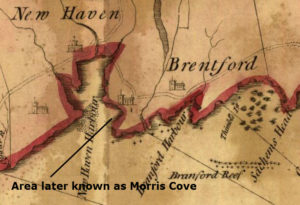
East Haven’s Revolutionary Salt Works
East Haven’s Amos Morris helped supply Americans with salt (essential for preserving food) during critical shortages brought on by the American Revolution.
Read
Fire Ravages Cos Cob School – Today in History: July 29
At 1:59 a.m. on July 29, 1990, a smoke detector signal alerted the central Greenwich fire station of a fire at the Cos Cob School.
Read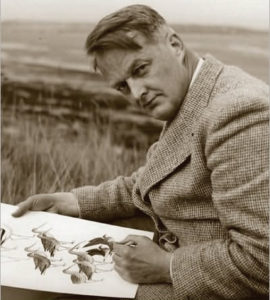
Roger Tory Peterson Dies – Today in History: July 28
On July 28, 1996, ornithologist and artist Roger Tory Peterson died in Old Lyme.
Read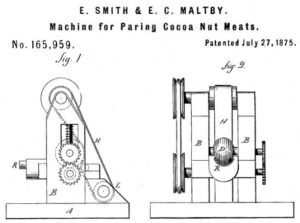
North Branford Vied for the Title of “Shredded Coconut Capital of the World” – Who Knew?
Patents granted to North Branford residents included one for a device used for paring coconut meats in 1875.
Read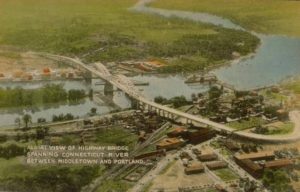
An American Heritage River – Today in History: July 27
On July 27, 1998, Vice President Al Gore designated the Connecticut River one of 14 American Heritage Rivers.
Read
Hope for the West: The Life and Mission of Lyman Beecher
Lyman Beecher was one of the most influential Protestant preachers of the 19th century, as well as father to some of the nation’s greatest preachers, writers, and social activists.
Read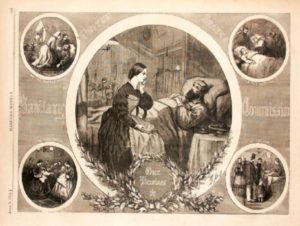
Sanitary Fair – Today in History: July 25
On July 25, 1864, the Stamford Ladies Soldiers’ Aid Society held a Sanitary Fair in response to the needs of Civil War soldiers
Read
The Hartford Wits
Eventually taking the name the “Hartford Wits,” influential figures of the 18th century got together to write poetry that documented the state of the times.
Read
Weir Farm the Result of a Trade – Who Knew?
Weir Farm, located in Ridgefield and Wilton, Connecticut, resulted from the trade of a painting and ten dollars.
Read
Levi Pease, Stage Route and Transportation Innovator
Somers, Connecticut, a small town near the state’s border with Massachusetts, was the site of a revolution in 18th-century transportation.
Read
The First Battle of Bull Run: Connecticut Troops Stand Firm When the Battle Turns Against Them
Connecticut troops earned admiration for staying to fight when others fled at the First Battle of Bull Run during the American Civil War.
Read
Cleopatra’s Needle and Groton’s Captain Davis – Who Knew?
Cleopatra’s Needle, the Egyptian obelisk erected in Central Park across from the Metropolitan Museum of Art, arrived safely from Egypt due to the ingenuity of Noank’s Henry E. Davis.
Read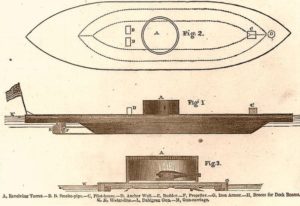
Cornelius Bushnell and His Ironclad Ship
Cornelius Scranton Bushnell was a 19th-century Connecticut businessman and shipbuilder whose successfully lobbied on behalf of a local railroad enterprise.
Read
Hammonasset State Park Serves the State and its Residents
Located in Madison, Hammonasset State Park provides visitors with opportunities for swimming, sunbathing, or strolling along the park’s meandering boardwalk.
Read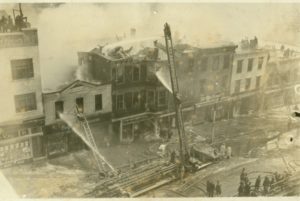
The Greenwich Avenue Fires of 1908 and 1936 Sparked Upgrades to Town’s Emergency Services
From the ashes emerged new approaches to coordinating the town’s fire fighting resources.
Read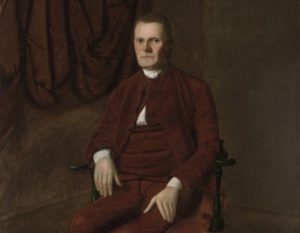
The Connecticut Compromise – Today in History: July 16
On July 16, 1787, a plan proposed by Roger Sherman and Oliver Ellsworth, Connecticut’s delegates to the Constitutional Convention, established a two-house legislature.
Read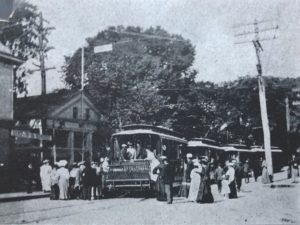
Trolley Campaigners Storm Small Towns and Votes for Women is the Battle Cry
In the wake of a 1912 trolley campaign, the woman’s suffrage movement rapidly gained ground across Connecticut.
Read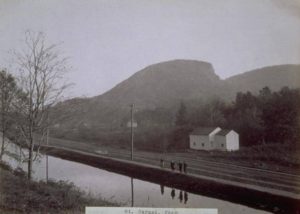
New England’s Grand Ambition: The Farmington Canal
Connecticut took leading role in waterway that transformed the region’s commerce.
Read
A Revolution On Two Wheels: Columbia Bicycles
Albert Pope’s company not only played a prominent role in developing improved bicycle designs, it also developed the market for them.
Read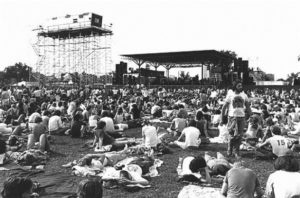
Colt Park and the Magical Summer of 1976
In the summer of 1976, Colt Park offered rock and roll fans an escape from troubled times through a series of concerts by some legendary acts.
Read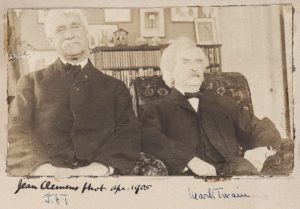
Joseph Hopkins Twichell: Asylum Hill’s Religious Leader and Mark Twain’s Closest Friend
Inspired by his friendship with Mark Twain, Joseph Twichell took up such causes as labor rights, immigration, education, and interfaith advocacy.
Read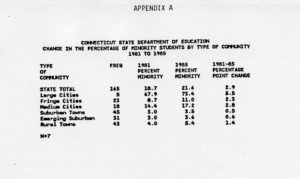
Sheff v. O’Neill – Today in History: July 9
On July 9, 1996, the Connecticut Supreme Court ruled that the state had an affirmative obligation to provide Connecticut’s school children with a substantially equal educational opportunity.
Read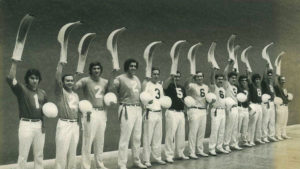
“The Basque Game in Town”: The Heyday of Jai Alai in Connecticut
Organized jai alai came to Connecticut in the 1970s, but charges of corruption soon brought the sport to an end in the Nutmeg State.
Read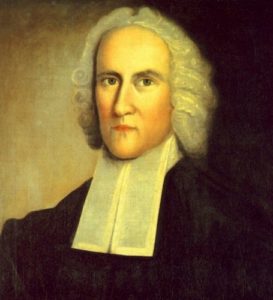
Jonathan Edwards’ Famous Sermon – Today in History: July 8
On July 8, 1741, theologian Jonathan Edwards spoke the words of the sermon “Sinners in the Hands of an Angry God” at a Congregational church in Enfield.
Read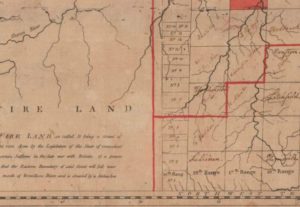
New Connecticut on Lake Erie: Connecticut’s Western Reserve
If you drive through the area of Ohio still called the Western Reserve today, you will find towns named Norwich, Saybrook, New London, Litchfield, Mansfield, and Plymouth.
Read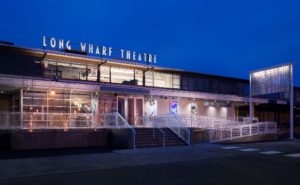
The Origins and Enduring Legacy of New Haven’s Long Wharf Theatre
As a smaller, quieter alternative to Broadway, New Haven’s Long Wharf Theatre overcame an unconventional location to become a smash success.
Read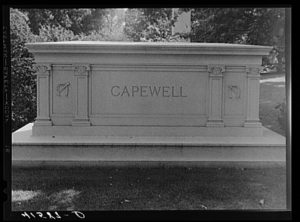
Horseshoe Nail Capital of the World – Who Knew?
In the late 19th century, George Capewell formed the Capewell Horse Nail Company, which mass produced horseshoe nails.
Read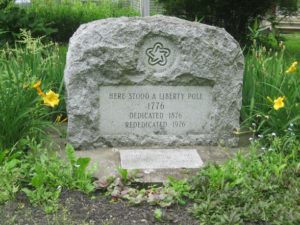
Hidden Nearby: Goshen’s Liberty Pole
A marker on East Street North in nearby Goshen, Connecticut, allows us a window on to past celebrations of American freedoms and liberties.
Read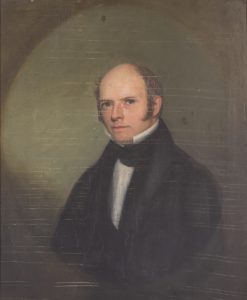
An Eccentric Middletown Polymath and Fossil Collector: Dr. Joseph Barratt
Despite his struggles with mental illness, Joseph Barratt was a significant contributor to the study of natural history in the Connecticut Valley.
Read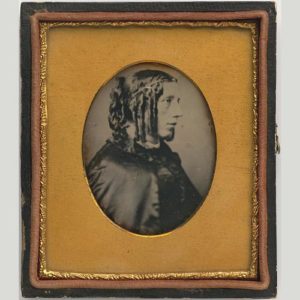
The Most Famous American in the World
In 1853, in cities and villages across Britain and Europe, throngs of admirers pushed to catch a glimpse of a barely 5-foot-tall writer from America whose best-selling novel had taken slavery to task.
ReadMore Articles