




Other CT Humanities Programs

Creative Commons Licensing


News & Updates
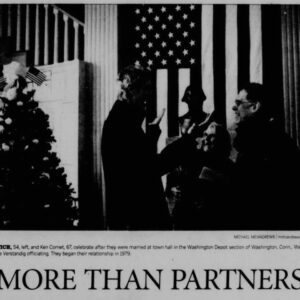
Connecticut Issues Same-Sex Marriage Licenses for the First Time – Today In History: November 12
On November 12, 2008, Connecticut issued its first marriage licenses for same-sex couples after Kerrigan et al. v. Commissioner of Public Health et al..
Read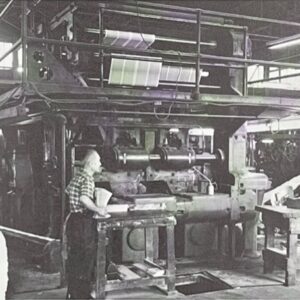
Charlton Publications: Song Lyric Printing Business to Major Player in the Comic Book Industry
By the late 1950s, Charlton Publications was home to some of the most accomplished artists and writers in the comic book industry.
Read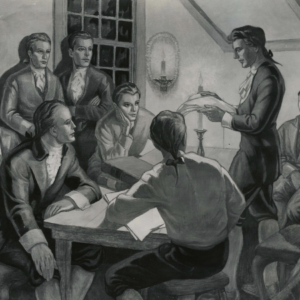
Linonian and Brothers in Unity: The Societies that Built Yale University’s Library
Two undergraduate literary societies, Linonian and Brothers in Unity, donated their large book collections to Yale’s nascent library.
Read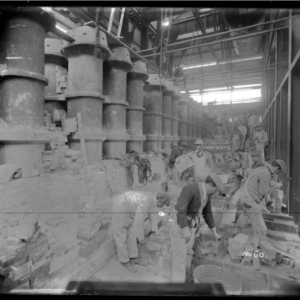
Early Connecticut Gas Light Companies
The first private gas light companies in Connecticut appeared just before 1850 in New Haven, Hartford, and Bridgeport.
Read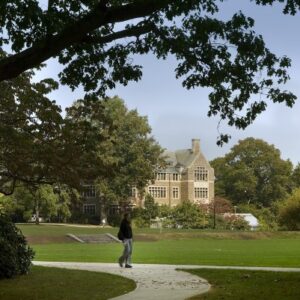
Connecticut College for Women: The State’s First All-Female Institution of Higher Learning
At a time when most universities accepted only men, Connecticut College for Women provided a liberal arts education for women.
Read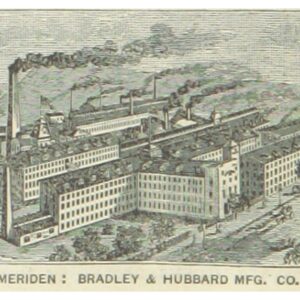
Illuminating Connecticut’s Past: The Bradley & Hubbard Legacy
Meriden’s Bradley & Hubbard Manufacturing Company was an industry-leading American manufacturer of kerosene lamps and metal household items.
Read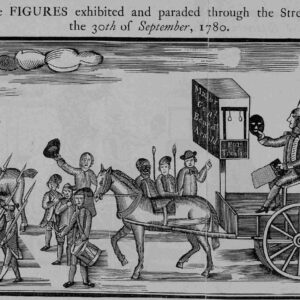
New London’s Tradition of Burning Benedict Arnold…in Effigy – Who Knew?
New London has a yearly tradition of burning an effigy of Benedict Arnold, the infamous Revolutionary War general turned traitor.
Read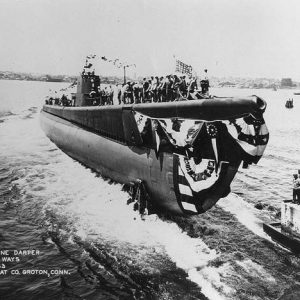
Electric Boat: From Innovation Trials to WWII Submarine Leadership
US submarines accounted for 63 percent of all Japanese ships sunk during WWII—Electric Boat’s vessels were responsible for a significant number of these successful outcomes.
Read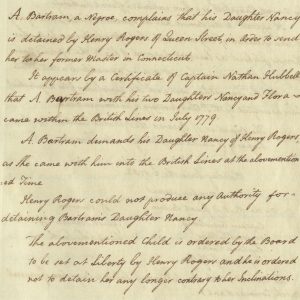
Black Loyalist Refugees: Toney Escapes During the Burning of Fairfield
The British burning of Fairfield during the Revolutionary War provided an opportunity for enslaved people to escape, including a man named Toney.
Read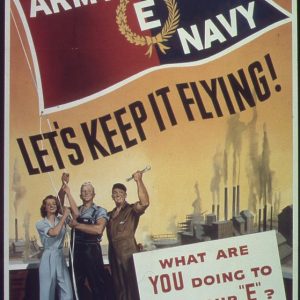
Army-Navy “E” Award Honors Connecticut for Support Against the Axis Powers
During WWII, the US military bestowed 175 Connecticut war plants with the Army-Navy “E” Award for outstanding production contributions to the army and navy.
Read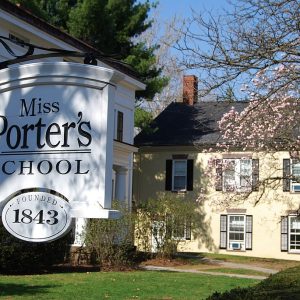
Miss Porter’s School in Farmington
Miss Porter’s School, founded in 1843 in Farmington, is an elite, female, privately funded, 40-acre, educational institution in central Connecticut.
Read
Derby’s Osbornedale Farms, Frances Kellogg, and the Dairy Industry
A family legacy developed by Frances Kellogg, Derby’s Osbornedale Farms stands out for its impact on the Holstein-Friesian breed and contributions to the dairy industry.
Read
“Girl Pilot”: Mary Goodrich Jenson Breaks Barriers in Aviation and Journalism
Blending her aviation and journalism careers, Wethersfield’s Mary Goodrich Jenson pushed the boundaries of both fields.
Read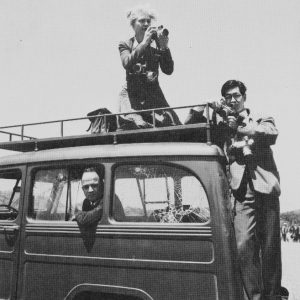
Photojournalist Margaret Bourke-White: “No Picture Was Unimportant to Her”
Margaret Bourke-White photographed some of the 20th century’s most significant people and events, but spent her later years in Darien, Connecticut.
Read
Jacques and Therese Makowsky and the Development of the Cornish Game Hen
In 1950, the Makowskys crossed a white Cornish cock with a White Plymouth Rock hen to produce a small hybrid that they patented as the Rock Cornish Game Hen.
Read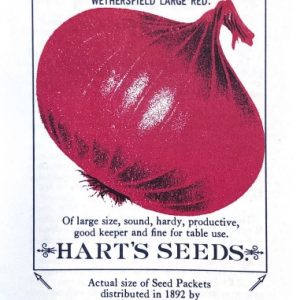
Oniontown: How Hard Work, Tall Tales, and Red Onions Built Wethersfield
Until the 19th century, the red onion trade supported Wethersfield as the first commercial town along the Connecticut River.
Read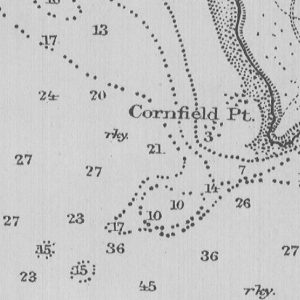
Cornfield Point: Old Saybrook’s Forgotten Scenic Alcove
Cornfield Point, a rocky scenic area bordering the Long Island Sound, is often overlooked but is significant in the state’s maritime and prohibition histories.
Read
Jewish Farming Communities in Connecticut in the 19th and 20th Centuries
As Jewish immigration to Connecticut increased in the late 19th century, close-knit farming communities formed in Chesterfield and Colchester.
Read
Disaster on the Sound: The Collision of the Steamboats Stonington and Narragansett
The crash involving the S.S. Stonington and the S.S. Narragansett resulted in the death of dozens, massive destruction, and a media frenzy.
Read
Sophia Woodhouse Welles: Wethersfield’s World-Famous Bonnet Maker
Wethersfield’s Sophia Woodhouse Welles made a name for herself as an inventor and a businesswoman in antebellum America with her bonnets.
Read
Alan L. Hart: Pioneer in Medicine and Transgender History
An early person to undergo gender affirmation surgery, Alan L. Hart was a physician who pioneered the use of x-ray in early detection for tuberculosis.
Read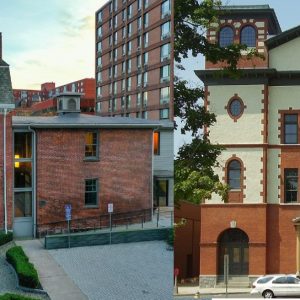
The Amos Bull House and Sterling Opera House: The First Connecticut Listings on the National Register of Historic Places – Who Knew?
The Amos Bull House in Hartford and the Sterling Opera House in Derby are tied for Connecticut’s first listing on the National Register of Historic Places.
Read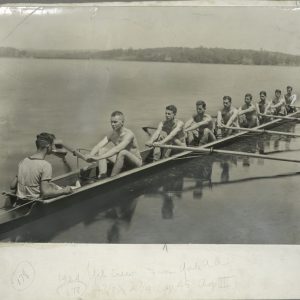
Derby Day on the Housatonic
A rowing event on Lake Housatonic, “Derby Day,” was so popular among Yale students that it drew upwards of thirty to fifty thousand spectators.
Read
Connecticut Discovered Lyme Disease – Who Knew?
The discovery of Lyme disease, and its transmission through ticks, got its start around Lyme, Connecticut in 1975.
Read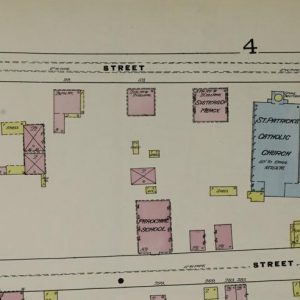
Connecticut’s First Roman Catholic Church
Hartford’s Holy Trinity Church became the first Roman Catholic church in Connecticut in 1829 and served the community for over 20 years.
Read
Connecticut and the Armenian Genocide
The Armenian genocide during the early 20th century had a profound impact on Armenian communities and their descendants in Connecticut.
Read
Lillian Hoban: Beloved Illustrator of “I Can Read” Books
Lillian Hoban contributed her talents to nearly one hundred books, securing herself a place as one of the country’s best-loved authors and illustrators.
Read
James Merrill: Connecticut’s First Poet Laureate
As one of the leading American poets of the 20th century and Connecticut’s first poet laureate, James Merrill lived in Stonington for four decades.
Read
Banner Lodge: A Vacation Playground for an Excluded Population
From the 1930s to the 1970s, Banner Lodge was one of the most popular vacation destinations in Connecticut and actively welcomed a Jewish clientele.
Read
The 29th First to Enter Confederate Capital When It Surrenders – Today in History: April 3
On the morning of April 3, 1865, the 29th (Colored) Regiment Connecticut Volunteer Infantry awoke to find that the enemy had abandoned their positions in Richmond, Virginia.
Read
Fuller Brush Tower Collapses – Today in History: March 31
On March 31, 1923, a 56,000-gallon water tank dropped through 4 concrete floors of the Fuller Brush Company Tower.
Read
Benjamin Spock: Raising the World’s Children
Pediatrician Benjamin Spock revolutionized childcare in the 20th century before becoming a leading figure in the anti-war movement of the 60s and 70s.
Read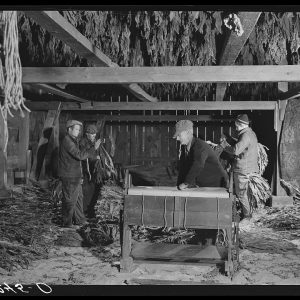
Polish Tobacco Farmers in the Connecticut River Valley
Many Polish immigrants found work on the tobacco farms in the Connecticut River Valley that specialized in the tobacco used for cigar wrappers.
Read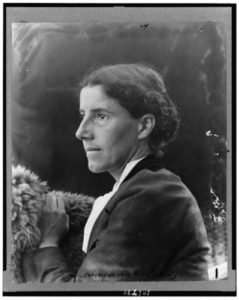
Charlotte Perkins Gilman
Best remembered for her short story “The Yellow Wallpaper,” this Hartford author’s larger legacy is a life dedicated to women’s issues and social reform.
Read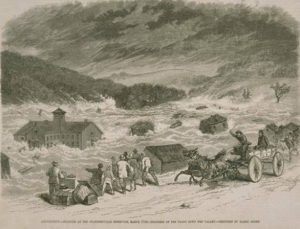
Bursting of the Staffordville Reservoir – Today in History: March 27
On March 27, 1877, the Staffordville Reservoir Company’s dam burst, flooding the valley for a distance of five miles and causing the loss of two lives.
Read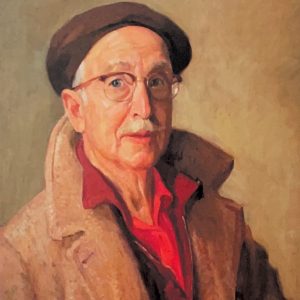
George Laurence Nelson: Artist of Kent’s Seven Hearths
In addition to his artistic pursuits, George Laurence Nelson lived in Kent, Connecticut, for over half a century and restored the historic Seven Hearths house.
Read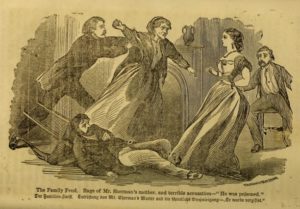
Lydia Sherman: The Derby Poisoner
Lydia Sherman confessed to killing three husbands and four children, but it is believed that the total number of her victims may be much higher.
Read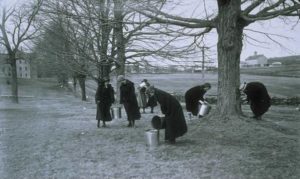
A New Source of Farm Labor Crops Up in Wartime
During times of war, in Connecticut, as in many other states, women became an increasingly important resource in food production.
Read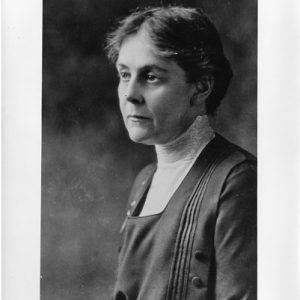
Alice Hamilton: The Nation’s Leading Expert on Industrial Diseases
Dr. Alice Hamilton was a leading authority on industrial diseases and the first female faculty member at Harvard before she retired to Hadlyme, Connecticut.
Read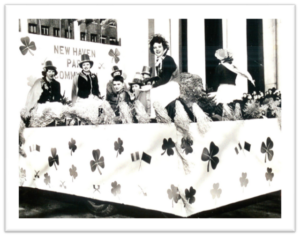
St. Patrick’s Day – Today in History: March 17
On March 17, 1842, the New Haven Hibernian Provident Society, founded in 1841, sponsored the first St. Patrick’s Day Parade held in New Haven.
Read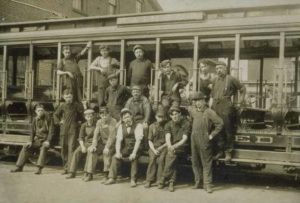
A Revolution in Horse Power: The Hartford & Wethersfield Horse Railroad Goes Electric
In 1888, Hartford commuters and city-goers zipped down Wethersfield Avenue in a horseless trolley car for the first time.
Read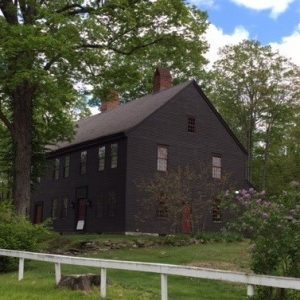
The Welcoming Warmth of Kent’s Seven Hearths
For over 272 years, Kent’s Seven Hearths has lived many lives—from trading post to school to artist’s home to historical society.
Read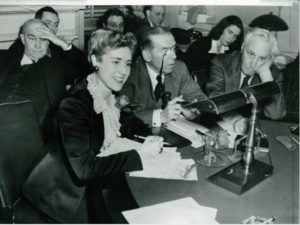
Clare Boothe Luce Changed Perceptions about Women in Business and Politics
Clare Boothe Luce became the first woman to represent Connecticut in the US House of Representatives and later became an ambassador to Italy.
Read
Connecticut’s French Connections
From Huguenots to French Canadian mill workers to modern immigration, Connecticut has always been a place shaped, in part, by a steady French influence.
Read
The Road to Busytown: Richard Scarry’s Life in Fairfield County
Inspired by Connecticut communities, Richard Scarry invented and illustrated some of the most beloved characters and communities in children’s literature.
Read
The Trailblazing Bessye Bennett
In 1974, Connecticut finally admitted its first African American female lawyer, Bessye Bennett.
Read
America’s First Woman Governor: Ella Grasso, 1919-1981
Born to Italian immigrant parents in Windsor Locks, Grasso held state and federal offices at a time when women politicians were rare.
Read
Turnpikes and Transportation in Sharon
The town of Sharon, like many early communities in the colony, required basic road and bridge infrastructure in order to maintain a thriving community.
Read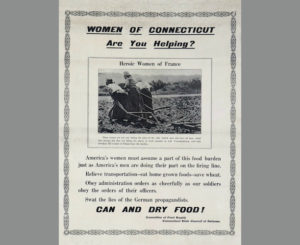
Food Needed to Win the War Comes from Washington
During World War I, the Town of Washington instituted a number of programs to increase food production and preservation to feed Allied armies and the European people,
Read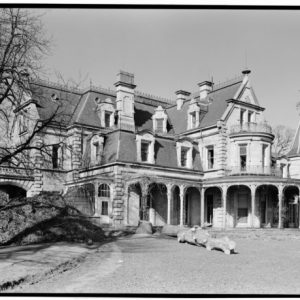
Lockwood-Mathews Mansion Captures the Gilded Age in Norwalk
The Lockwood-Mathews Mansion provides a glimpse into the opulence of the Gilded Age when railroad tycoons built summer homes along the New England shoreline.
ReadMore Articles