




Other CT Humanities Programs

Creative Commons Licensing


News & Updates
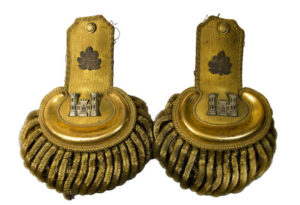
One of the Honored Dead: General J. K. F. Mansfield
A resident of New Haven and Middletown, Joseph Mansfield rose to the rank of brigadier general in the Union army before losing his life at the Battle of Antietam.
Read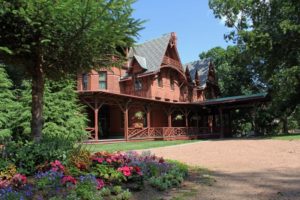
Where Mr. Twain and Mrs. Stowe Built Their Dream Houses
This bucolic oasis on Hartford’s western edge became home to great literary talents, social reformers, politicians, and other nationally-regarded luminaries of the mid-to-late 1800s.
Read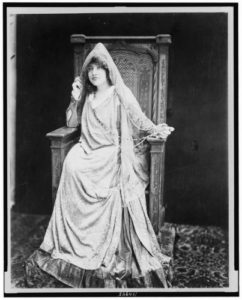
Sarah Bernhardt Performs in Hartford – Today in History: June 8
On June 8, 1906, French stage and film actress Sarah Bernhardt appeared at Foot Guard Hall in Hartford.
Read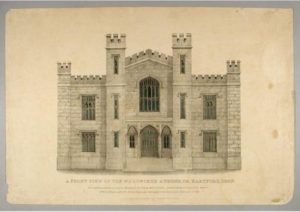
Gothic Connecticut
A museum, former library, and a home are just three notable examples of an architectural style popular in the 1800s.
Read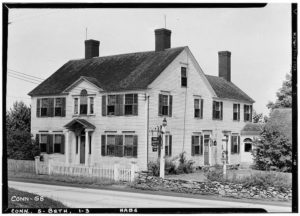
The House That Hoadley Built
The Wheeler-Beecher House (Hoadley House) serves as an outstanding example of Colonial architecture and also of renowned architect David Hoadley’s work.
Read
Phineas Pratt’s Machine for Making Combs – Today in History: April 12
On April 12, 1799, Phineas Pratt of Ivoryton, Connecticut, a deacon, silversmith, and inventor, received a patent for a “machine for making combs.”
Read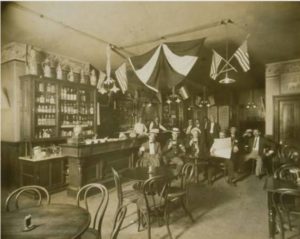
Union Brew
Brewery strike in 1902 leads some to drink ginger ale, rather than beer, as a sign of solidarity.
Read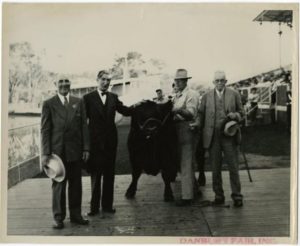
Hard Times: Governor Wilbur Cross and the Great Depression in Connecticut
Born in Mansfield, Governor Wilbur Cross helped see Connecticut through the Great Depression and several natural disasters.
Read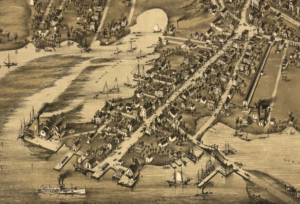
The British Raid on Essex
On a cold April night in 1814, a British raiding force rowed six miles up the Connecticut River to burn the privateers of Essex, then known as Pettipaug.
Read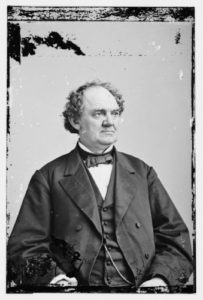
P. T. Barnum Dies – Today in History: April 7
On April 7, 1891, the showman and entertainer, P. T. (Phineas Taylor) Barnum died in Bridgeport.
Read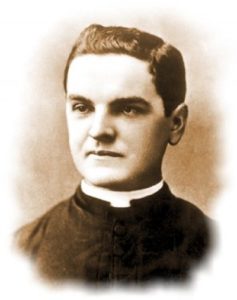
Knights of Columbus Chartered – Today in History: March 29
In October 1881, the Reverend Michael Joseph McGivney and male parishioners of St. Mary’s Roman Catholic church in New Haven founded Knights of Columbus.
Read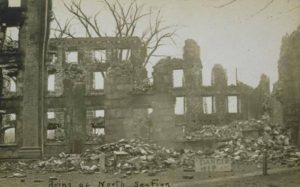
Fire at Wesleyan’s North College – Today in History: March 1
On March 1, 1906, North College at Wesleyan University in Middletown was destroyed by fire.
Read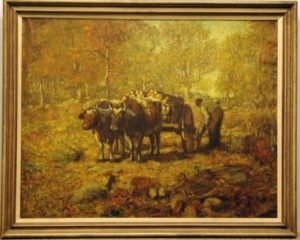
Artist Louis Paul Dessar Dies – Today in History: February 14
On February 14, 1952, American artist Louis Paul Dessar died in Preston, Connecticut.
Read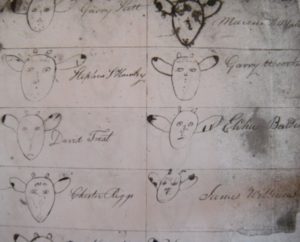
Branding Law Enacted – Today in History: February 5
In 1644, Connecticut enacted the first branding law in the colonies, calling for all livestock owners to ear-mark or brand their cattle, sheep, and swine.
Read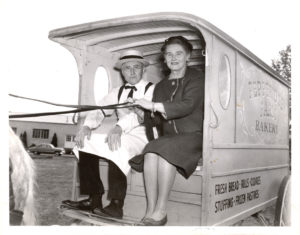
Pepperidge Farm: Healthful Bread Builds a Business
Margaret Rudkin founded the popular brand Pepperidge Farm after finding out her son’s asthma was made worse by additives found in bread.
Read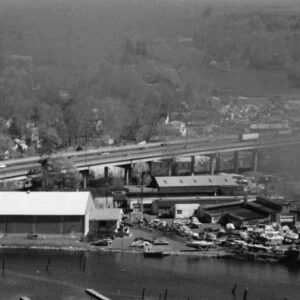
Mianus River Bridge Collapses – Today in History: June 28
Not long after midnight on June 28, 1983, a section of the Mianus River Bridge on I-95 in Cos Cob collapsed.
Read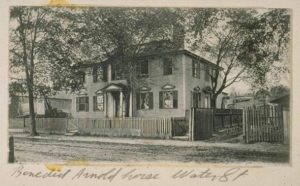
Benedict Arnold died in London, England – Today in History: June 14
On June 14, 1801, Revolutionary War general and traitor Benedict Arnold died in London.
Read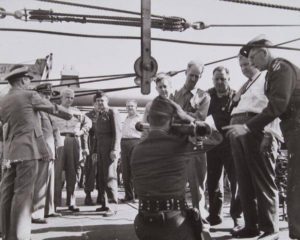
The Bazooka Changes War – Today in History: June 14
On June 14, 1942, the General Electric Company in Bridgeport finished production on the “Launcher, Rocket AT, M-1,” better known as the bazooka.
Read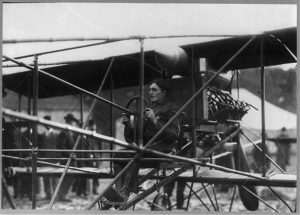
Hamilton Breaks Air Records – Today in History: June 13
Charles Keeney Hamilton completed the first round-trip journey ever made between two large cities in an airplane in the United States.
Read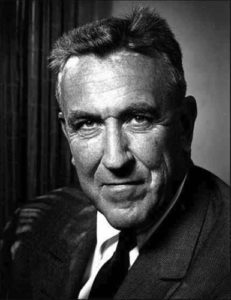
Governor Chester Bowles Dies – Today in History: May 25
On May 25, 1986, Chester Bowles, a Connecticut governor, Congressional representative, ambassador, and author, died in Essex, Connecticut.
Read
Waterbury Tornado – Today in History: May 24
On May 24, 1962, a tornado hit the towns of Waterbury, Wolcott, and Southington.
Read
An Orderly & Decent Government: A New State, A New Constitution, 1776-1818
The American Revolution prompted enormous political and social changes in other states, but Connecticut remained a “land of steady habits” until 1817 brought change to state government.
Read An Orderly & Decent Government: Business and Government, 1905-1929
The early years of the 20th century were a time of vigorous political and social reform.
Read An Orderly & Decent Government: Making Self-Government Work, 1776-1818
The freedom won in the American Revolution did not spread to African Americans. The Constitution of 1818 formed the basis for state government until 1965.
Read An Orderly & Decent Government: A Society in Ferment, 1819-1865
Industry, immigration, and urbanization characterized Connecticut in the 19th century.
Read An Orderly & Decent Government: Making Self-Government Work, 1888-1905
Connecticut’s ancient system of town-based representation ensured the continuation of small town values and perspectives.
Read An Orderly & Decent Government: Establishing Self Government, 1634-1776
Puritans from Massachusetts settled early Connecticut towns, and in 1639 drew up “The Fundamental Orders” by which they would be governed.
Read An Orderly & Decent Government: Making Self-Government Work, 1634-1776
In 1698 the General Court reorganized itself to deal more effectively with Connecticut’s complex new problems.
Read An Orderly & Decent Government: Significant Events & Developments, 1634-1776
After the Pequot War, New settlers and speculators sought to establish new towns from the colony’s undistributed lands.
Read An Orderly & Decent Government: Searching for the Common Good, 1819-1865
During the early 19th century, the General Assembly was slow to deal with rising crime, poverty and the other social costs of a rapidly changing society.
Read An Orderly & Decent Government: Searching for the Common Good, 1888-1905
Stimulated by immigration and industrialization, Connecticut cities expanded rapidly
Read An Orderly & Decent Government: Searching for the Common Good, 1634-1776
In the Great Awakening, impassioned evangelical ministers attracted crowds of thousands and the General Assembly promptly banned traveling preachers.
Read An Orderly & Decent Government: Significant Events & Developments, 1888-1905
Connecticut saw its population of immigrants from southern and eastern Europe swell in the last decades of the 19th century.
Read An Orderly & Decent Government: Making Self-Government Work, 1819-1865
In the mid-19th century, Connecticut looked toward changing its electoral processes as well as its civil rights record.
Read An Orderly & Decent Government: A Clash of Cultures, 1888-1905
In the last decades of the 19th century, Connecticut was transformed by a massive flood of immigrants fleeing political and economic instability.
Read An Orderly & Decent Government: Making Self-Government Work, 1929-1964
Connecticut attempted to reorganize it state government by streamlining its agencies and rejected a number of socially progressive programs.
Read An Orderly & Decent Government: Searching for the Common Good, 1905-1929
J. Henry Roraback dominated Connecticut like no political leader before him.
Read An Orderly & Decent Government: Significant Events & Developments, 1905-1929
Early 20th century life in Connecticut was marked by the election of 1912, US entry into World War I, and the Great Depression.
Read An Orderly & Decent Government: Significant Events & Developments, 1819-1865
Connecticut in the 1830s was characterized by a move from agriculture to industry, and the loss of residents to westward migration.
Read An Orderly & Decent Government: Searching for the Common Good, 1776-1818
During the American Revolution, loyalists were common in Connecticut. Those sympathetic to the patriot cause helped provide for the Continental army.
Read An Orderly & Decent Government: Making Self-Government Work, 1905-1929
With war’s end, suffrage advocates stepped up their campaign for equal rights.
Read An Orderly & Decent Government: Searching for the Common Good, 1929-1964
Organized labor grew strong during wartime while discriminatory practices in housing and education persisted throughout the state.
Read An Orderly & Decent Government: Making Self-Government Work, 1866-1887
The late 1800s witnessed significant challenges to Connecticut’s voting and taxation laws.
Read An Orderly & Decent Government: Significant Events & Developments, 1929-1964
The era of Wilbur Cross and the Great Depression transitioned into World War II and state control by Democrat mastermind John Bailey.
Read An Orderly & Decent Government: Significant Events & Developments, 1965-Now
Connecticut recast its constitution, reapportioned its House and Senate, and struggled with providing equal rights to all races and socio-economic classes in the state.
Read An Orderly & Decent Government: Significant Events & Developments, 1776-1818
With its limited supply of fertile land either occupied or exhausted, one of Connecticut’s principal exports in the post-Revolutionary years was people.
Read An Orderly & Decent Government: A Co-Equal Branch of Government, 1965-Now
Connecticut replaced town-based representation with legislative districts while the state struggled to supply equal opportunities across race and class lines.
Read An Orderly & Decent Government: Searching for the Common Good, 1866-1887
In 1873, the legislature began to look more closely at the problems of Connecticut’s workers.
Read An Orderly & Decent Government: Making Self-Government Work, 1965-Now
The 1965 state constitution helped redistribute populations more evenly into districts. It was also a period of new representation for women and African Americans in the state government.
Read An Orderly & Decent Government: Significant Events & Developments, 1866-1887
After the Civil War, arms manufacturing kept Connecticut industries busy, but an economic depression in the 1870s drastically changed things.
ReadMore Articles