




Other CT Humanities Programs

Creative Commons Licensing


Now Viewing:
Immigration

Jacques and Therese Makowsky and the Development of the Cornish Game Hen
In 1950, the Makowskys crossed a white Cornish cock with a White Plymouth Rock hen to produce a small hybrid that they patented as the Rock Cornish Game Hen.
Read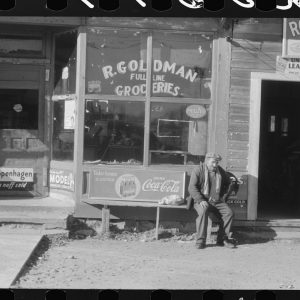
Jewish Farming Communities in Connecticut in the 19th and 20th Centuries
As Jewish immigration to Connecticut increased in the late 19th century, close-knit farming communities formed in Chesterfield and Colchester.
Read
Connecticut and the Armenian Genocide
The Armenian genocide during the early 20th century had a profound impact on Armenian communities and their descendants in Connecticut.
Read
Polish Tobacco Farmers in the Connecticut River Valley
Many Polish immigrants found work on the tobacco farms in the Connecticut River Valley that specialized in the tobacco used for cigar wrappers.
Read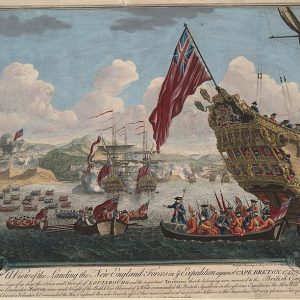
Connecticut’s French Connections
From Huguenots to French Canadian mill workers to modern immigration, Connecticut has always been a place shaped, in part, by a steady French influence.
Read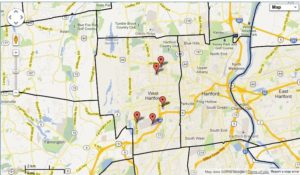
Race Restrictive Covenants in Property Deeds
“No persons of any race except the white race shall use or occupy any building on any lot…” Language such as this still appears in Hartford-area housing covenants today.
Read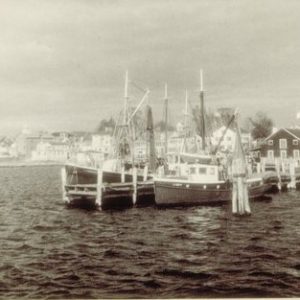
The Sea in their Blood: The Portuguese in New London County
Many Portuguese immigrants came to the US as mariners serving aboard ships, some remained to build new lives and communities in Connecticut.
Read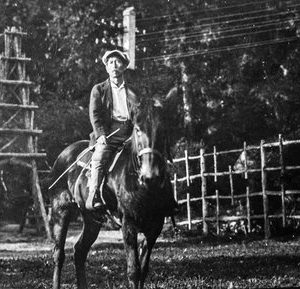
Yukitaka Osaki and Gillette Castle: One of Hadlyme’s First Japanese Immigrants
For over four decades, Japanese-born Yukitaka Osaki worked for Gillette, becoming a recognizable neighbor in the Hadlyme community.
Read
Building an Armenian Community in New Britain
Since the late 19th century, Armenian immigrants and descendants have created a community and shaped New Britain history.
Read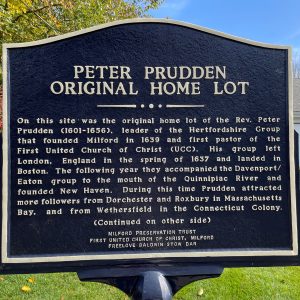
Peter Prudden: Milford’s First Minister
A pioneer preacher, a Puritan, and a scholar, Peter Prudden established the first European settlement that became the city of Milford.
Read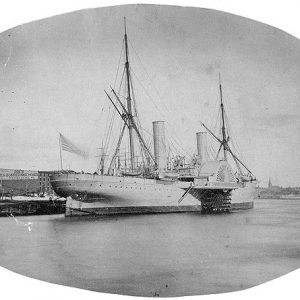
They Also Served: Chinese, Southeast Asians, and Hawaiians in the American Civil War
There were a substantial number of Chinese, Southeast Asian, and Pacific Islanders who fought in the Civil War—many of whom served in Connecticut regiments.
Read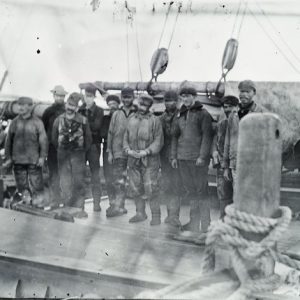
Africans in Search of the American Dream: Cape Verdean Whalers and Sealers
Cape Verdeans formed parts of whaling and sealing crews leaving Connecticut since the early 19th century, sometimes even rising to positions of authority.
Read
At the Sign of the Yellow Dragon: Hartford’s First Chinese Restaurants
The first Chinese restaurant opened in Hartford in 1898 and evolved as immigrants from different parts of China introduced new tastes.
Read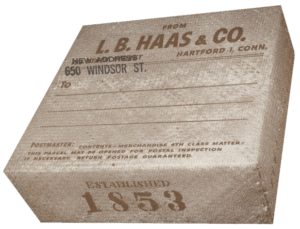
Cash Crop: L.B. Haas & Co. and the History of Tobacco in Connecticut
Louis B. Haas was a Dutch immigrant who opened a retail cigar store, Essman & Haas, on Central Row in Hartford in the late 1840s.
Read
The Steady Evolution of a Connecticut Family Business
Simsbury and Avon’s fuse-making helped build America’s railroads, mine her natural resources, expand the Panama Canal, and even blow up tree stumps in local farm fields.
Read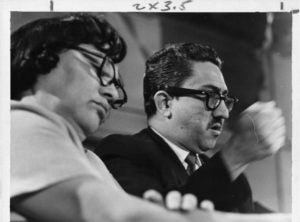
Maria Colón Sánchez, State Representative and Community Advocate
The first Latina elected to the Connecticut General Assembly started as a grassroots activist for Hartford’s Puerto Rican community.
Read
Portland Puts Its Stamp on an Architectural Era
The brownstone quarries in Portland, Connecticut, owe their existence to millions of years of prehistoric sediments accumulating in the Connecticut River.
Read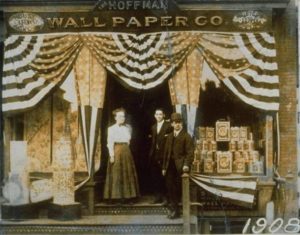
Tradition and Transformation Define Hartford’s Jewish Community
From the mid-1800s to the present, Jews have called Connecticut’s capital city home and enriched it with their cultural traditions and civic spirit.
Read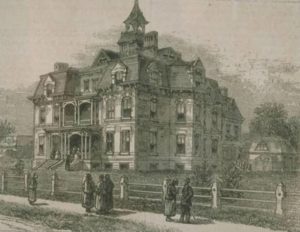
Yung Wing, the Chinese Educational Mission, and Transnational Connecticut
In their respective tragic but inspiring final American acts, Yung and the Mission reflect the worst and best of the Chinese Exclusion Act era.
Read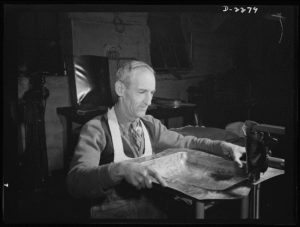
Early 20th-Century Immigration in Connecticut
Connecticut played host to new, vast populations of Italian, Polish, and French Canadian immigrants who helped reinvent the state’s cultural identity.
Read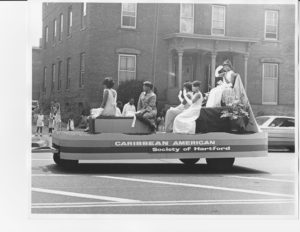
West Indians in Hartford
A significant wave of immigration to the United States from the West Indies began in the 1940s, spurred by labor shortages during World War II.
Read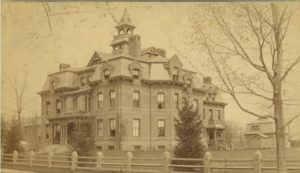
Yung Wing’s Dream: The Chinese Educational Mission, 1872-1881
In all, 120 Chinese students came to live and study in New England. When they returned home, they served as diplomats, engineers, naval officers, physicians, educators, administrators, and magistrates.
Read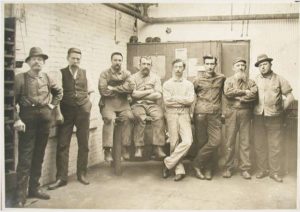
Late 19th-Century Immigration in Connecticut
Immigration to Connecticut in the second half of the 19th century proceeded much as it had in earlier decades.
Read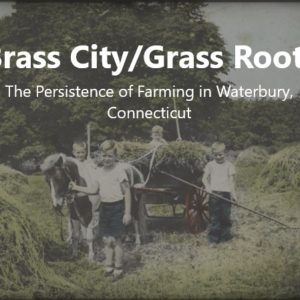
Brass City/Grass Roots: Bucks Hill: Waterbury’s Rural Holdout
This article is part of the digital exhibit “Brass City/Grass Roots: The Persistence of Farming in Waterbury, Connecticut”
Read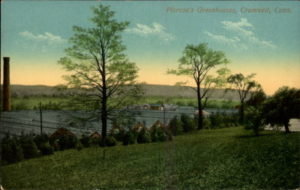
The Rose King of America Transformed Cromwell’s Landscape
Andrew N. Pierson established A.N. Pierson’s, Inc., a small floral nursery in Cromwell that evolved into the largest commercial rose growing enterprise in the country.
Read
Witamy to Little Poland! – A Thriving Neighborhood in New Britain
A bustling ethnic neighborhood along Broad Street in New Britain is home to such a vibrant Polish population that it earned the nickname “Little Poland.”
Read
Fighting Sons of Erin: Connecticut’s Irish Regiment in the Civil War
Men with names like O’Brien, Kennedy, Mahoney, Murphy, Donnelly, Fitzpatrick, and Sullivan flocked to enlist in what a recruiting poster confidently described as a “destined to be gallant Regiment.”
Read
The Wearing of the Green: 19th-century Prints of Irish Subjects by Hartford’s Kellogg Brothers
Irish immigrants arrived in Connecticut in great numbers during the 1800s and, while anti-Irish sentiment was widespread, Hartford’s Kellogg brothers viewed these new Americans as potential customers.
Read
Hartford’s Great Migration through Charles S. Johnson’s Eyes
During the Great Migration of the early 1900s, African Americans from the rural South relocated to Hartford and other Northern cities in search of better prospects.
Read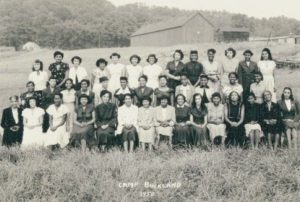
Laboring in the Shade
Thousands of Black Southern students, including a young Martin Luther King Jr., came north to work in Connecticut’s tobacco fields.
Read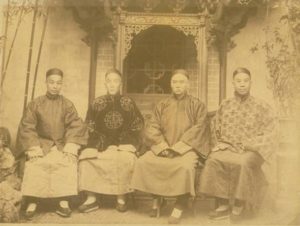
Avon’s Educational and Cultural Pioneer
Yung Wing was the first Chinese student to graduate from a university in the United States.
Read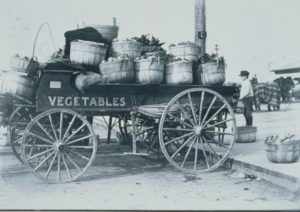
Hartford’s “Little Italy”
In the early 1900s, Italians made new lives for themselves in Hartford.
Read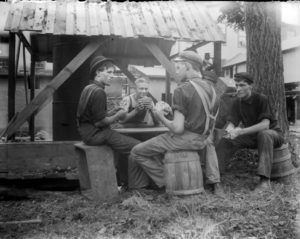
Avon Industry: From Underground to Outerspace
The origins of the Climax Fuse Company date back to 1852 in Avon, Connecticut.
Read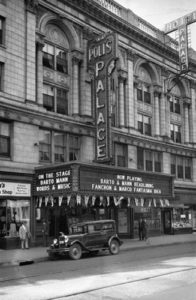
Sylvester Poli, Negotiating Cultural Politics in an Age of Immigration
This Italian-born businessman and New England theater magnate also helped the working poor in New Haven’s immigrant communities at the turn of the 20th century.
Read
The Many Layers to Onion Farming in Westport
Westport’s fertile soil and ease of access by boat and rail once made it home to a thriving onion farming industry.
Read
A Russian Village Retreat in Southbury
The unique blend of American and Russian architecture found in Churaevka, along with the important part the village played in defining early 20th-century Russian immigration, earned it a spot on the National Register of Historic Places in 1988.
Read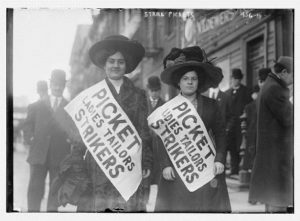
Triangle Shirtwaist Fire: Connecticut Lessons from a Tragedy
While the Triangle Shirtwaist fire in New York City is one of the most famous tragedies behind the organized labor movement, Connecticut had its share of equally dangerous work environments in the early 20th century.
Read
Early 19th-Century Immigration in Connecticut
Numerous factors contributed to the growth of Connecticut in the decades following American independence.
Read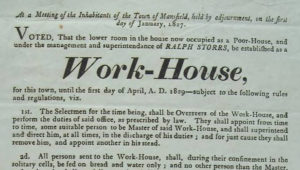
Connecticut Poor Law Aimed to Care for the Needy
Connecticut instituted a Poor Law in the 17th century to comply with a directive from the British government that the colony ensure for the care of the poor within its borders
Read
Windsor Tobacco: Made in the Shade
By the mid-19th century, the “Tobacco Valley,” Springfield, Massachusetts to Hartford, Connecticut had become a center for cash-crop production.
Read
An Orderly & Decent Government: A Society in Ferment, 1819-1865
Industry, immigration, and urbanization characterized Connecticut in the 19th century.
Read An Orderly & Decent Government: Searching for the Common Good, 1888-1905
Stimulated by immigration and industrialization, Connecticut cities expanded rapidly
Read An Orderly & Decent Government: Significant Events & Developments, 1888-1905
Connecticut saw its population of immigrants from southern and eastern Europe swell in the last decades of the 19th century.
Read An Orderly & Decent Government: A Clash of Cultures, 1888-1905
In the last decades of the 19th century, Connecticut was transformed by a massive flood of immigrants fleeing political and economic instability.
Read An Orderly & Decent Government: Significant Events & Developments, 1905-1929
Early 20th century life in Connecticut was marked by the election of 1912, US entry into World War I, and the Great Depression.
Read An Orderly & Decent Government: Significant Events & Developments, 1819-1865
Connecticut in the 1830s was characterized by a move from agriculture to industry, and the loss of residents to westward migration.
Read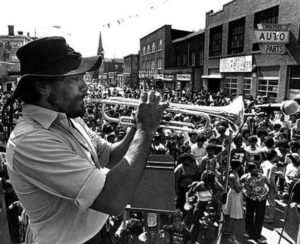
Park Street Festival, Hartford 1978
The Park Street Festival is an annual Puerto Rican celebration held in the heart of Hartford’s Puerto Rican community on Park Street.
ReadMore Articles