


By Amanda Rivera
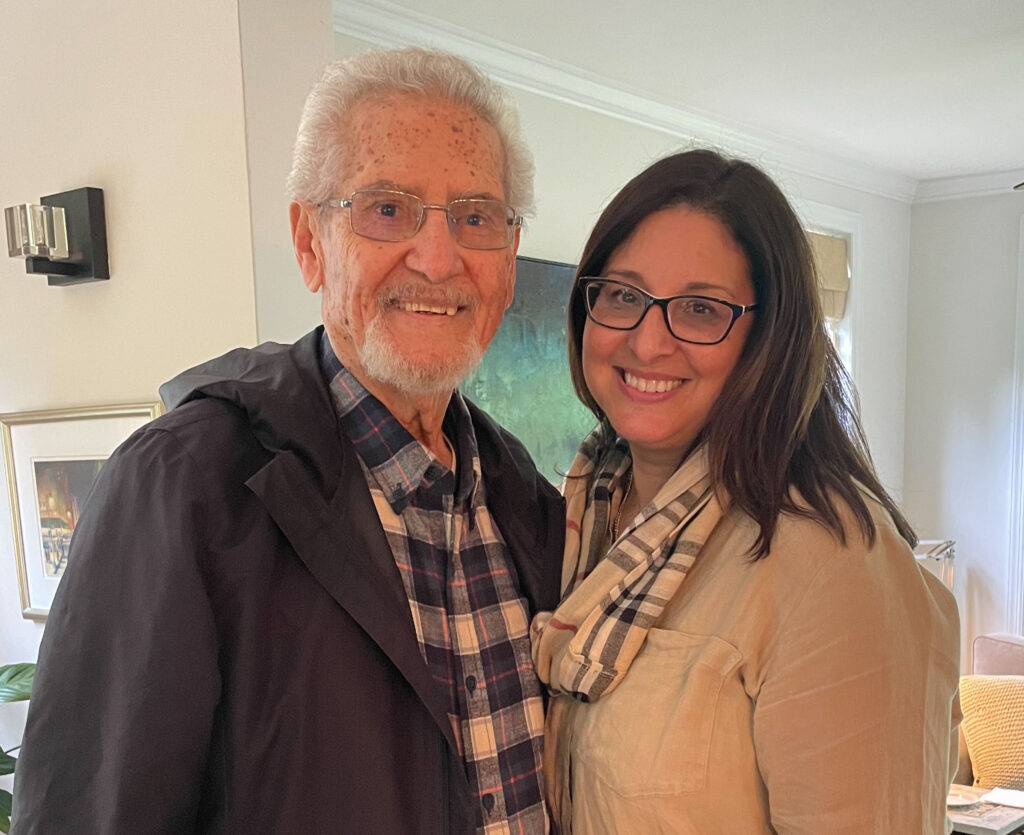
Wilfredo “Willie” Matos led a long life as an activist for Puerto Ricans, Latinés, and marginalized people throughout Connecticut in his 84 years of life.
Early Life
He was born on March 30, 1940, in Toa Baja, Puerto Rico. He moved to Bridgeport, Connecticut in 1951, when his father, a manual laborer, and his mother, a bilingual typist from Camuy, were looking for better job opportunities. They settled in the South End neighborhood, and while people were initially fascinated by Matos’s Puerto Rican heritage, he recalled a change in the perceptions of Puerto Ricans after a few years.
On March 1, 1954, four Puerto Rican nationalists—Rafael Cancel Miranda, Andrés Figueroa Cordero, Irvin Flores Rodríguez, and Lolita Lebrón—entered the US Capitol. In support of the Puerto Rican independence movement, they fired shots into the crowd from a balcony in the House of Representatives chamber and injured five congressmen. Back in Connecticut, this event sparked suspicion in Matos’s classmates’ eyes. Matos remembered that, after his teacher referenced the incident in a class lesson, “when I went out for recess, the whole school came together and encircled me and started shouting insults. ‘Dirty Puerto Rican, go back here you came from! Go back to the jungle!’”
Bridgeport Young Lords
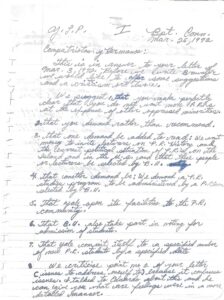
A scanned copy of a letter Willie Matos wrote to Despierta Boricua activists in 1972
This event shaped Matos’s activism moving forward. After getting married, having a daughter, and spending a brief period of time working in the nonprofit sector, Matos decided Bridgeport needed more militant political action. He first established an organization based off a racist epithet against Latinés—S.P.I.C. (Spanish Power in Command)—in 1970. Shortly thereafter, they became the Bridgeport chapter of the Young Lords, a Latino street gang turned activist group that started in Chicago. Matos was one of the older capitáns in the organization (most chapter leaders were in their late teens and early twenties).
One of the Bridgeport Young Lords’s major demonstrations started in January 1971. Matos successfully mobilized the 110 Puerto Rican tenants of 381-91 East Main Street in a five-month rent strike. The apartment building’s boiler—which had been malfunctioning for years—stopped working in the dead of winter, leaving tenants without heat and hot water for five days over the Christmas holidays in December 1970. Tenants demanded the complete replacement of the boiler as well as monthly extermination services, three times-weekly garbage pickup, and other improvements to the building’s overall maintenance. When landlords William Miko and Howard Steinhardt refused to comply, tenants paid just half of their $110 rent from mid-January through early May.
On May 20, 1971, while holding a rally about the rent strike in front of the building, Matos was arrested. The police then broke up the rally based on rumors of an invasion of “1,000 armed Young Lords” from New York. Abe and Robert Katz, acting on behalf of the landlords, ransacked Matos’s office at 381 East Main St. shortly thereafter, while community members firebombed a cop car, a plumbing company, and a school in retaliation for Matos’s arrest and the ensuing police brutality. For Matos, the rebellion’s ultimate success laid in what it provided symbolically for the Puerto Ricans of Bridgeport. “Before the Young Lords,” Matos explained. “Puerto Ricans used to walk like this [drops head downward]…they [would] answer with their head bowed. After the rebellion, they walked like this [moves his head upward to meet eye level]. With pride. ‘Yeah, I’m not afraid.’”
Lifelong Activism
Matos’s time as a Young Lord ended shortly after the rebellion, but his passion for community engagement continued. As his daughter came of age, he pivoted towards advocating for equitable education in Bridgeport, particularly bilingual education, and supported a lawsuit brought forth by the NAACP and other Puerto Rican activists to fight for the hiring of more Black and Latiné teachers in the Bridgeport school system (a lawsuit which would not be settled for well over a decade). He also became an investigator for the Human Rights Commission, advocating a case for a Black police officer who had been discriminated against by his white colleagues.
Willie Matos’s advocacy for the working class and people of color continued until his death on October 14, 2024, at the age of 84, while speaking on a panel for Latiné civic engagement at Albertus Magnus College in New Haven, Connecticut.
Amanda Rivera is a 6th-year PhD candidate in the Department of American Studies at Yale University, studying Puerto Rican educational activism in and around New Haven, Connecticut.