



By Khalil Quotap
Take some bread, add sauce and a little cheese, and eat it. How could something so simple inspire so much debate?
Connecticut has adopted the title of “Pizza Capital of the United States,” but with the invention coming from another country—and a short ride down I-95 bringing you to pizzerias older than the ones in New Haven—how can the most southern New England state claim the mantle? Is the claim justified?
A Dish with Global Roots
Pizza started as a simple, practical dish in Naples, Italy: something that could feed a family easily and cheaply. When it made its way to the United States, it came through many points of entry, including New York and Connecticut. In New York, starting with Gennaro Lombardi selling pies in his grocery store in Little Italy in 1905, pizza became fast food—a quick slice you could grab and eat while walking down the street. It was never really meant to be a sit-down, family meal.
There’s something about that quick, street-style slice that still defines New York pizza today. But as the country changed and the suburbs grew, so did the idea of pizza as a shared meal. Families started gathering around full pies, not just slices, and leftovers were always a welcome bonus.
New Haven’s Place in the Debate
In the late 1800s, due to the ports in New Haven and the rise of factory and construction jobs, a wave of Italian immigrants settled in the city, particularly around Wooster Square. These new residents transformed the neighborhood, opening bakeries and small shops out of their homes to help make ends meet. These bakeries weren’t were not just businesses; they became gathering places filled with familiar smells, offering fresh bread, sweets, and foods that reminded people of home. One family even sold treats—and a newer dish at the time, pizza—from a cart that roamed the streets like a modern-day ice cream truck. What started as a simple combination of bread, sauce, and cheese quickly became something more. It connected people to their roots, their neighbors, and eventually, to a growing community-wide debate over who made it best—a debate that still hasn’t cooled down.
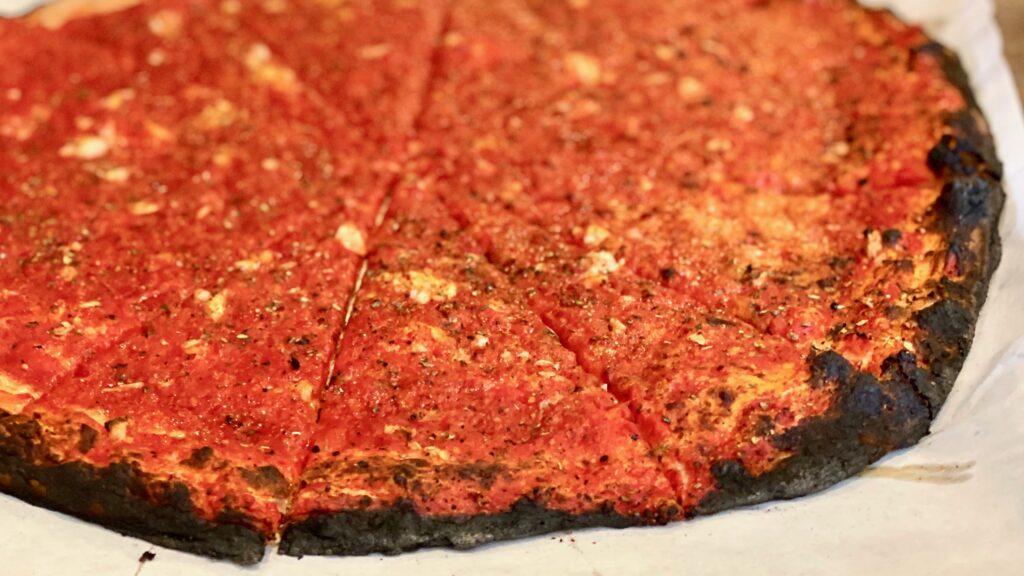
Frank Pepe’s (est. 1925), Sally’s (est. 1938), and Modern (est. 1934) are three of the major players that serve up the unique apizza style that has been around for nearly 100 years. Start with the coal-fired ovens, which give New Haven’s apizza its signature charred crust: thin, crisp, and just slightly chewy. Then there’s the white clam pizza, a Pepe’s original topped with fresh clams, garlic, olive oil, and grated cheese. And, of course, there’s the culture around it all: the long lines on Wooster Street, the decades-old family rivalries, and the passionate loyalty that fans bring with every bite.
Today, New Haven alone has 63 pizza establishments, while Connecticut boasts 1,376 overall, according to a 2025 report from the Office of the State Comptroller:
“Not only does [Connecticut] have the highest density of pizza restaurants in the country, but it also leads the nation in the percentage of family-owned or independent pizzerias. Nearly 80% of Connecticut’s pizza restaurants—1,084 out of 1,376—are independently owned, compared to a national average of just 43%. This deep-rooted tradition of small, locally owned pizzerias sets Connecticut’s apizza apart.”
How Did the Word Spread?
Pizza has always been a regional thing, whether you’re talking about New Haven, Chicago, Detroit, New York, or even Los Angeles, but popular culture plays a role in shaping where people believe the best food comes from. And while Connecticut is a small state, New Haven’s history and its connection to Yale helped put it on the map. Add in great pizza, and word started to spread.
Then came the early 2000s, and with it, the rise of blogs and the instant upload of images to social media. Suddenly, the world felt smaller. Local food debates weren’t just local anymore. What used to be neighborhood bragging rights became national arguments not unlike Coke vs. Pepsi, Starbucks vs. Dunkin’. So, it’s only natural that one of the world’s most popular foods would become a battleground, too.
And that debate goes deep—like, down-the-rabbit-hole deep. People argue over whether it’s burnt or charred. What kind of cheese is used, or if there’s even cheese at all. Then there’s the sauce… or maybe it’s a white pie. Does it need clams to be an authentic New Haven experience? And, of course, the biggest pizza debate of all time: pineapple.
Why the Debate Matters
Our tastes are part of who we are. We hold on to things that feel like home—meals tied to memories—and that shapes how we see the world. For those who grew up in Connecticut, we have a shared idea of what pizza is, and the New Haven style has had a major impact on how pizza is made and appreciated throughout the region.
As our global community has become more connected, our instinct to root for our local teams—and our local food—has only intensified. It’s that local pride, those memories we build with friends and family, that fuel this debate. And really, is it such a bad thing to argue about and get excited over? What’s wrong with a pizza party or a taste test with friends?
In those moments, we talk and share, we remember and relax. It’s about community, and that brings us right back to where this all started. Because long before blogs or rankings or social media debates, pizza was about neighborhoods, tradition, and the people who built something lasting from just a little bread, sauce, and cheese.
The Pizza Capital?
In 2024, a group of New Haven pizza-makers and enthusiasts assembled on the steps of the U.S. Capitol where Representative Rosa DeLauro entered a statement into the Congressional record declaring New Haven the “Pizza Capital of the United States.” In 2025, the Connecticut tourism board launched The Connecticut Pizza Trail, which highlights the best 100 pizzerias around the state, by advertising via billboards all around New York City with the bold message: “The Nation’s Best Pizza—Not You, New York.” The Tweed-New Haven Airport is full of pizza-themed signage and artwork; the state’s welcome signs even boast this claim to fame. But does Connecticut truly deserve the crown?
That’s not for one person to decide. Pizza is being made all over the world, using fresh and local ingredients that spark just as much debate as the original question. From the ever-popular pineapple argument to sushi pizza in Japan, the definition of pizza keeps evolving. But in the end, what defines pizza isn’t the ingredients, it’s the community that gathers around it. And for those of us who grew up in Connecticut, we’ve always known what we had. The difference now? The internet finally caught up. New Haven didn’t just enter the conversation—it helped shape it. And whether you’re standing in line on Wooster Street or arguing in a comment thread, one thing’s clear: this little state is still one of the places that sets the bar.