



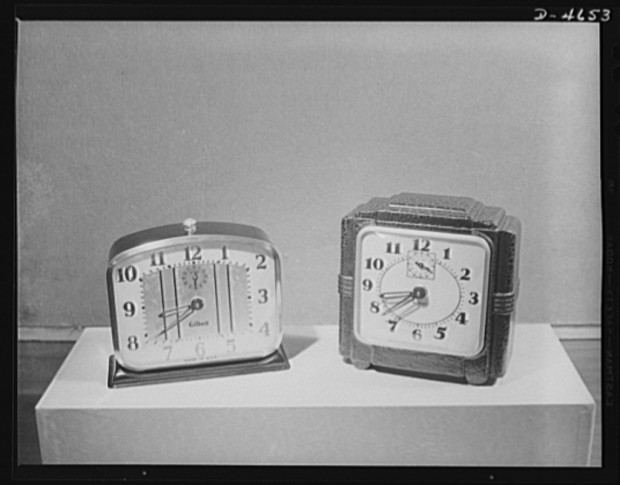
…that the William L. Gilbert Clock Corporation of Winsted was one of the few clock-making firms in Connecticut allowed to continue the manufacture of clocks during World War II.
Why? In 1940 they had installed machinery that produced clock cases made from molded papier-mâché. At that time, most of Connecticut’s clockmakers still used metal cases; so, when restrictions were placed on materials needed for the war effort, they had to discontinue their manufacture. The composition clock cases saved brass, aluminum, bronze, steel, and phosphor and lowered transportation costs by reducing the clocks’ weight by 47½ percent.